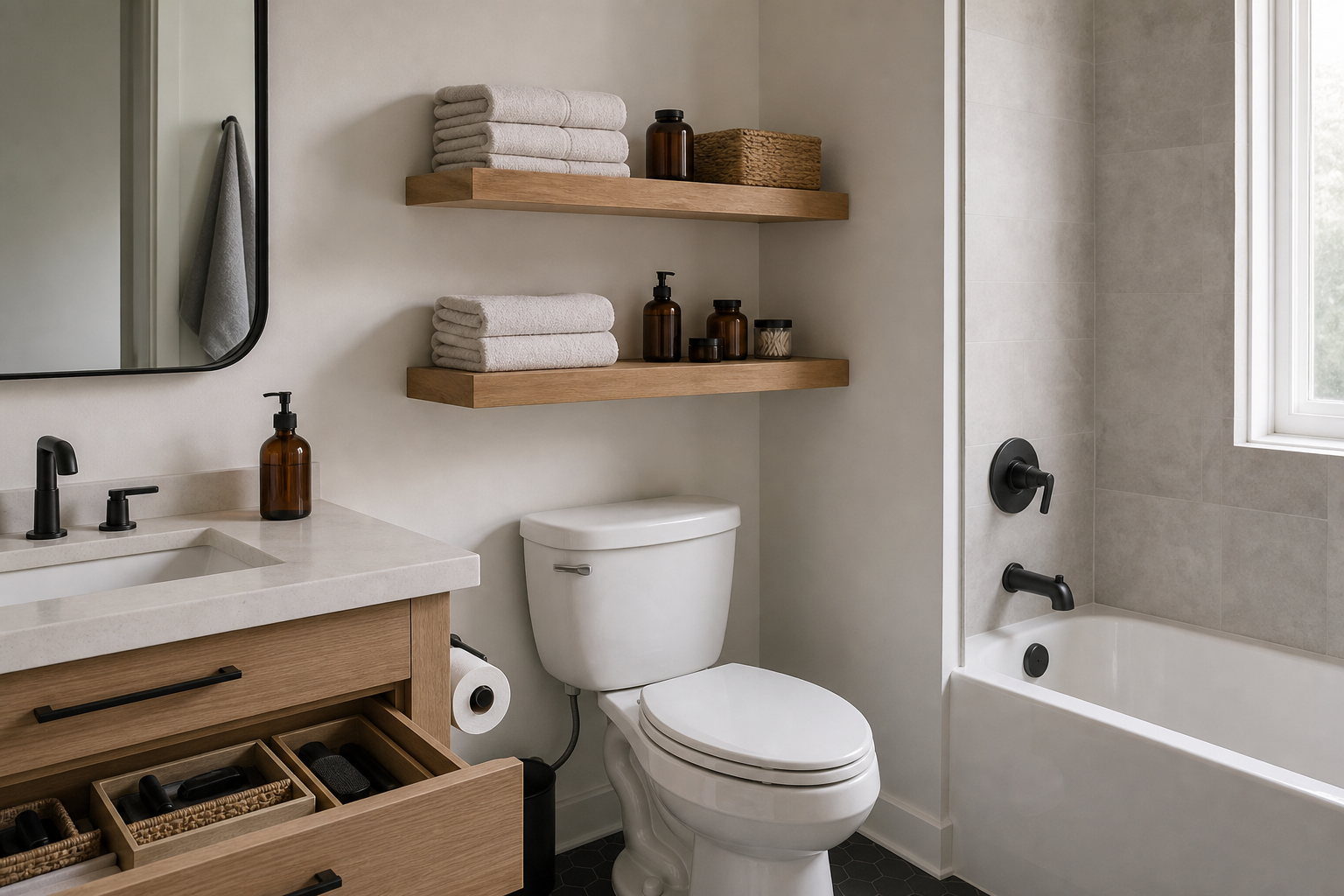
A bathroom shelf and storage makeover should make daily routines simpler while keeping plumbing accessible and materials safe in humidity. Begin by reducing what the room holds, then choose storage based on measured items, wall structure, splash exposure, and who uses the space. A few well-placed shelves and better vanity organizers usually outperform a room crowded with trendy containers.
Inventory before buying organizers
Empty shelves and group items by daily use, backup stock, occasional use, and disposal. Measure the tallest bottles and the widths of categories rather than guessing from the empty cabinet. Expired products, duplicate tools, and packaging consume more space than most storage systems can recover.
Return only what belongs in a bathroom. Medicines and temperature-sensitive products may be better elsewhere according to their labels. Keep cleaning chemicals away from children and incompatible products separated. The makeover should improve access without creating a safety problem.
Map moisture, structure, and clearances
Note splash zones, shower steam, exhaust performance, door swings, towel use, outlets, and concealed plumbing. Solid wood, steel, coated wire, and engineered products behave differently in humidity. A shelf directly beside a shower needs more moisture resistance than one across a ventilated room.
Before drilling, identify studs and consider likely wire and pipe routes. Do not rely on a detector as permission to drill anywhere. Heavy cabinets, stone shelves, and loaded floating shelves need suitable structure and fasteners; uncertain walls call for professional assessment.
Build storage around routines
Place everyday items between waist and eye level, backups higher or deeper, and bulky paper goods in lower closed storage. Give each user a tray, drawer, or bin. A morning routine works faster when dental, skincare, and grooming categories can be removed as a unit and returned without rearranging everything.
Leave some empty capacity. A cabinet packed edge to edge becomes disorganized after one shopping trip. Consistent containers can help, but use them to define categories rather than decanting every product for appearance. Original labels carry safety and expiration information.
Use the vanity more effectively
Under-sink cabinets are awkward because pipes divide the volume. Fit shallow pull-out drawers or stackable bins around—not against—the trap and shutoff valves. Keep connections visible enough to inspect and leave valves reachable. A two-tier <a href="/products/lynk-451121-under-sink-organizer/" class="product-inline-link">under-sink organizer</a> should be measured against the actual plumbing before purchase.
Drawer dividers prevent small tools from migrating. Choose washable inserts and avoid loading a drawer beyond its slides. If a vanity has a false front, a professional may be able to add a tip-out tray, but it should not interfere with the sink or create a place where water collects.
Add wall shelves with restraint
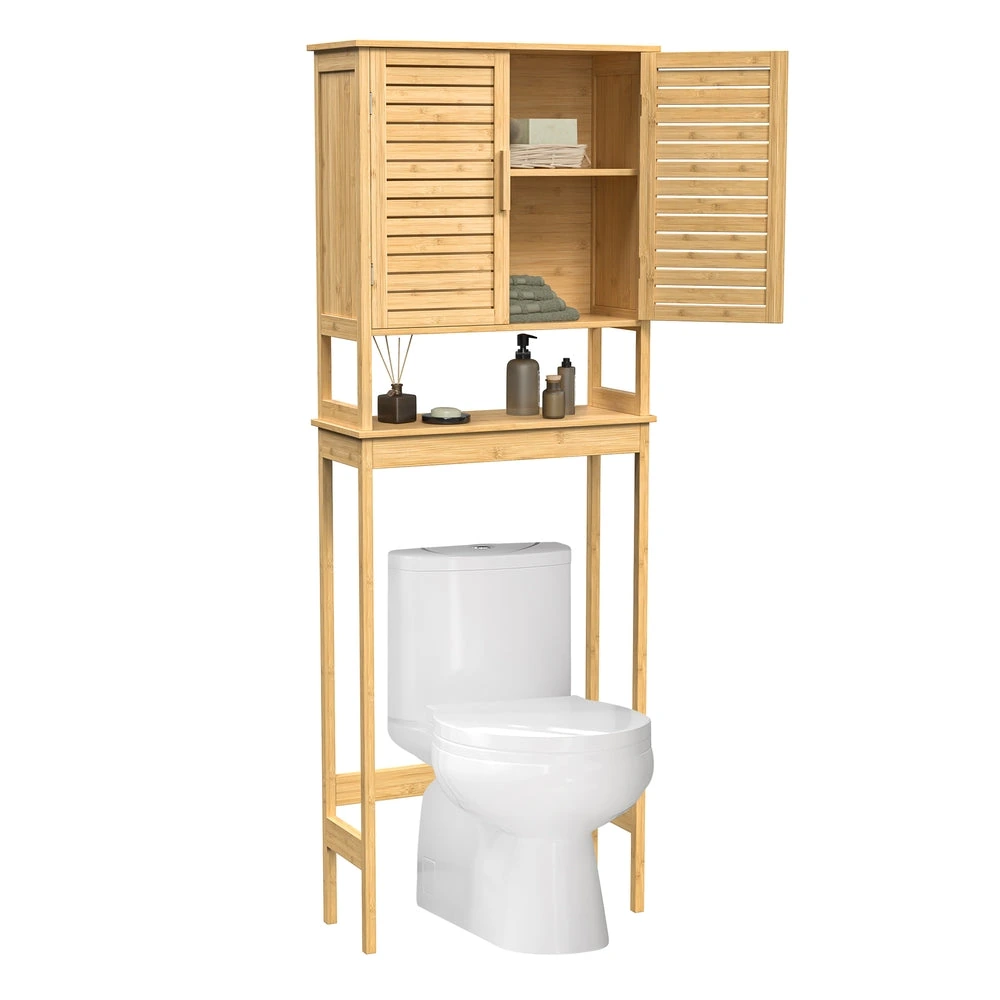
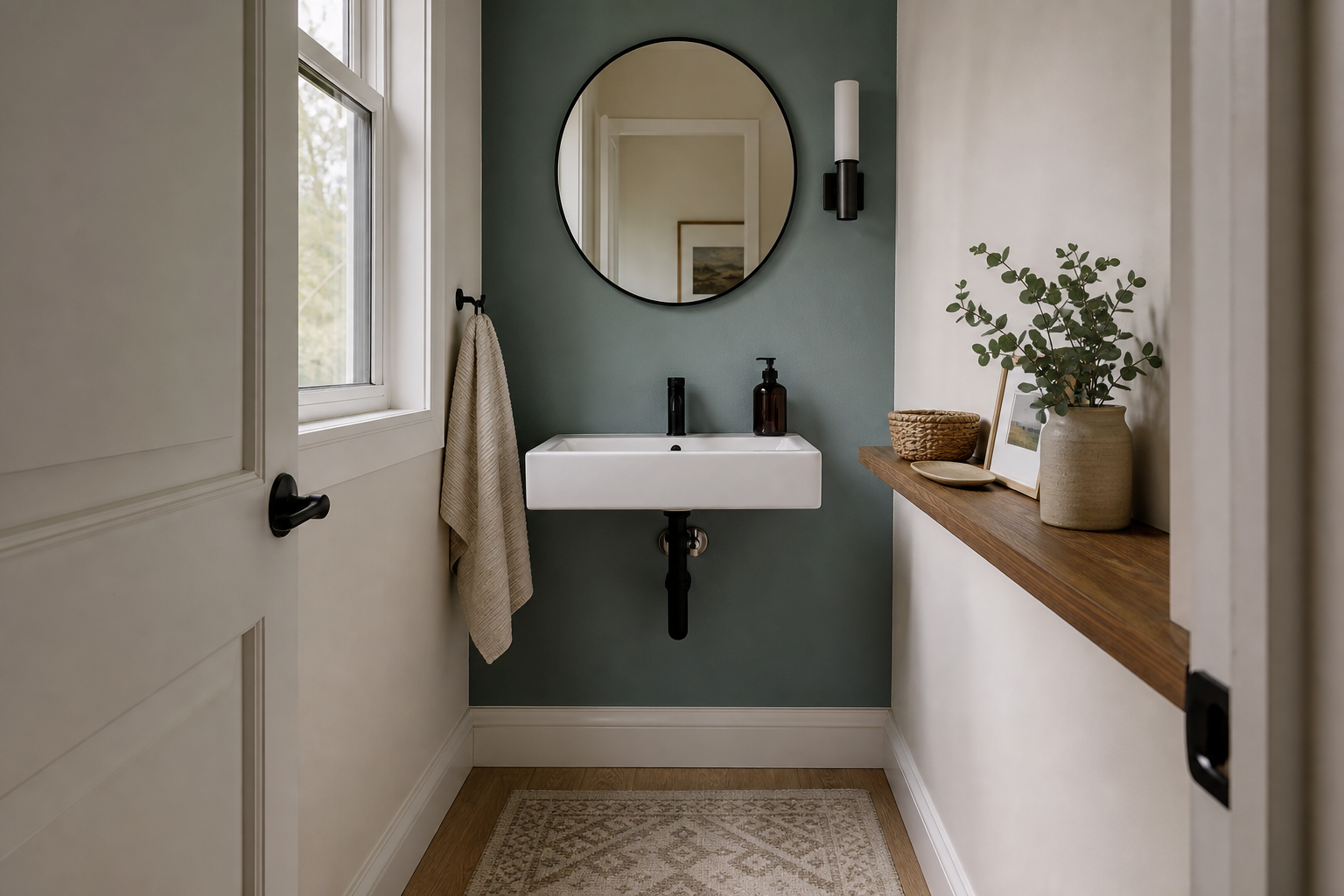
Open shelves are useful above a toilet or on a blank wall when depth and head clearance are appropriate. Keep heavy objects off high shelves and avoid placing glass where it can fall into a wet walking area. Two correctly spaced shelves usually look calmer and function better than a tall stack of narrow ledges.
Use moisture-suitable materials and sealed edges. Anchor for the loaded weight, not the empty shelf. A small level with stud finder can assist layout, but safe fastening still requires understanding the wall and hidden services.
Choose closed, open, or recessed storage
Closed cabinets hide visual clutter and protect supplies from dust, while open shelves make towels and daily items easy to reach. Recessed cabinets conserve projection but require a clear wall cavity and may encounter pipes, wires, or structural framing. Never cut framing or reroute services casually for a medicine cabinet.
A balanced plan often uses closed vanity storage, one accessible open shelf, and hooks for active towels. Over-the-door units can help renters but must not damage the door, block closure, or overload hinges. Freestanding towers need anti-tip restraint where appropriate.
Make a rental-friendly makeover
Renters can focus on removable drawer bins, tension-based solutions used within their ratings, over-door hooks with protective pads, carts sized for clear circulation, and freestanding shelves. Obtain written permission before drilling, painting, changing hardware, or applying adhesive products that may lift paint.
Save original hardware in a labeled bag. Test adhesive in an inconspicuous location and follow surface and humidity limits. “Removable” does not guarantee damage-free performance on weak paint, wallpaper, or damp drywall, so avoid hanging breakable or heavy items from adhesive hooks.
Coordinate the visual finish
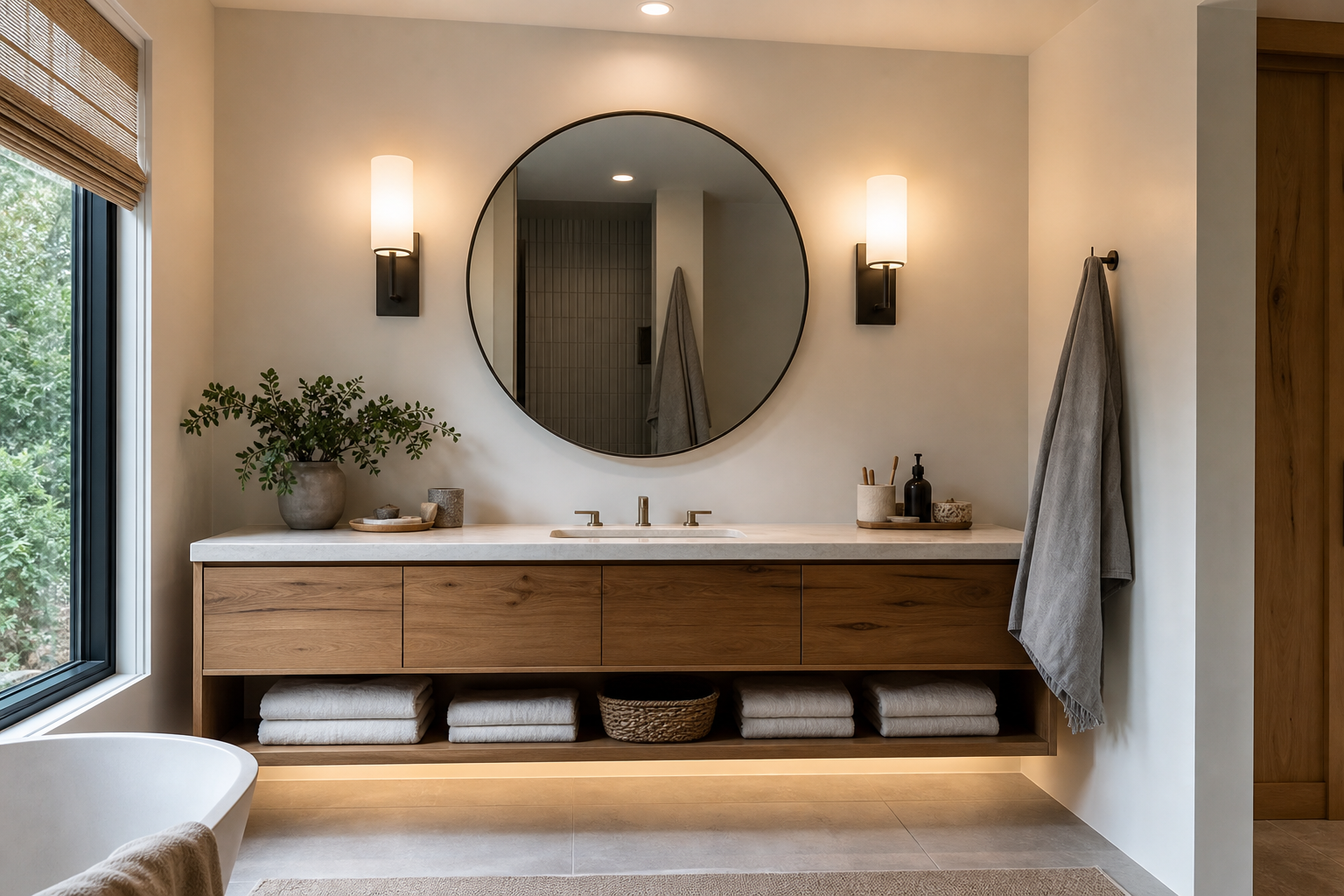
Storage looks intentional when container color, shelf material, and hardware relate to the existing vanity and fixtures. You do not need identical sets. Repeating one wood tone or metal finish and using quiet, washable bins gives the room cohesion without turning it into a showroom.
Keep labels discreet but legible where they help household members maintain categories. Avoid decanting chemicals into unlabeled containers. Fold towels to fit the shelf depth instead of allowing edges to project into the room, and reserve decorative objects for space that is not needed by essentials.
Install in the right order and test
Repair leaks and improve ventilation first. Patch and paint walls, then install cabinets or shelves, add internal organizers, and finally return edited contents. Use a template for repeated holes, protect surfaces while drilling, and collect dust so it does not enter open toiletries.
Load shelves gradually and check for movement. Open every door and drawer, operate the bathroom door, and reach each valve. After a week, adjust categories based on actual use. A storage plan is successful when items are easy to return, not merely when the first photograph looks tidy.
Budget by function instead of by container count
Begin with no-cost improvements: discard expired items, relocate products that do not belong in humidity, group categories, and clean the cabinet. Then spend on the bottleneck that affects daily use. If small objects disappear in a deep drawer, dividers may solve more than a wall cabinet. If towels have no home, one correctly anchored shelf may outperform several countertop baskets. If backups overwhelm the room, reducing purchase quantities may be the best storage intervention.
When comparing products, include fasteners, finish protection, delivery, assembly time, and potential wall repair. Inexpensive shelves become poor value when brackets are weak or edges swell. Conversely, simple coated bins can be effective inside a protected vanity where they are not expected to act as furniture. Buy one sample organizer and test it with real products before purchasing a matching set. The ability to clean and reconfigure it is usually more valuable than a perfect color match.
Reserve professional spending for structure, concealed services, and permanent built-ins. A carpenter can provide safe blocking or a cabinet fitted around unusual walls; a plumber can address leaking shutoffs before organizers conceal them; an electrician should handle uncertain wiring near wet areas. This division keeps the visible makeover affordable while directing money toward failures that could damage the room. Keep receipts and dimensions in a small home file so replacement bins or shelf parts can be matched later.
Quick-reference checklist
| Zone | Best use | Key caution |
|---|---|---|
| Eye-level shelf | Daily items | Limit depth and weight |
| Vanity drawer | Small tools | Use washable dividers |
| Under sink | Backups and cleaning items | Keep valves and trap accessible |
| High cabinet | Light occasional stock | Avoid heavy or breakable items |
| Door or cart | Renter-friendly overflow | Preserve circulation and closure |
Frequently asked questions
How deep should bathroom shelves be?
Depth should match the items while preserving headroom and circulation. Shallow shelves often suit toiletries and towels better than deep shelves that invite hidden clutter.
Are floating shelves safe above a toilet?
They can be when properly anchored, sensibly loaded, and positioned for clearance. Avoid heavy, sharp, or breakable objects and do not guess about hidden plumbing.
What material is best in a humid bathroom?
Choose products specifically suitable for the expected moisture and seal cut edges as directed. Ventilation and splash distance matter as much as the material name.
How can renters add bathroom storage?
Use measured freestanding pieces, removable drawer organizers, and approved over-door or tension solutions. Get written permission before drilling or applying finishes.
Should toiletries be decanted into matching bottles?
Only when doing so preserves required identification and safety. Keep medicines, chemicals, and products with important directions in original labeled packaging.
Share your results
Reader transformations
Have you tried this makeover? Share your experience below.