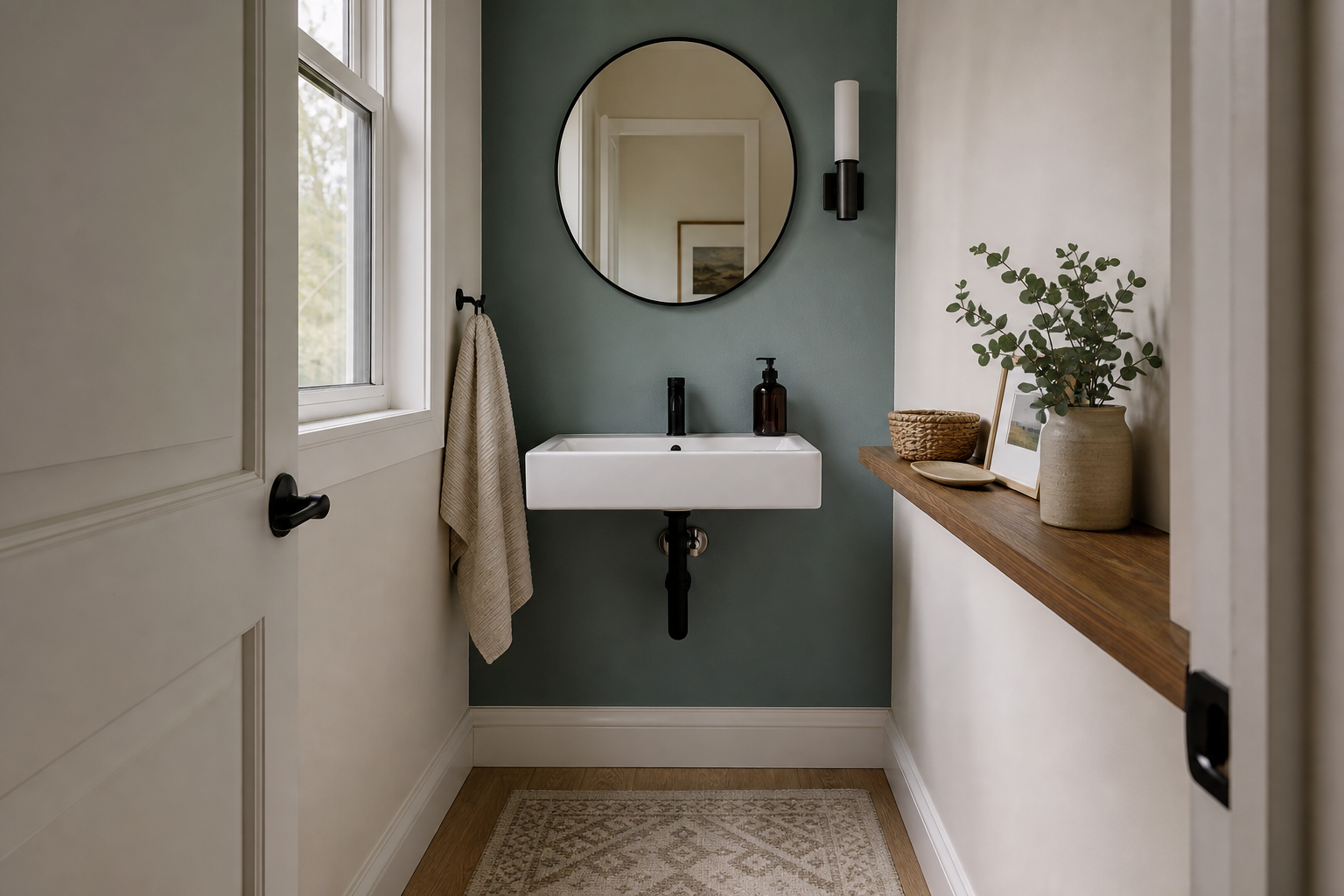
The best powder room makeover ideas use the room’s small footprint as an advantage. You can create a strong visual moment with paint, wallpaper, lighting, a mirror, and focused fixture updates without relocating plumbing or rebuilding the room. Success depends on measuring carefully, solving moisture or safety problems first, and choosing one dominant design idea rather than stacking every trend into a few square feet.
Start with the room’s fixed constraints
Measure the floor, wall widths, door swing, ceiling height, vanity, toilet clearances, and the positions of outlets, switches, supply valves, and exhaust vents. Powder rooms are small enough that a deeper mirror frame or projecting shelf can become an annoyance. Photograph every wall and test the door path before buying anything.
Decide what must stay. Keeping the plumbing, flooring, and lighting locations dramatically reduces cost and risk. Inspect for loose fixtures, staining, soft flooring, recurring condensation, or a weak exhaust route. Decorative work should wait until leaks and electrical concerns are corrected.
Choose one visual idea, not five
A powder room can carry stronger color or pattern than a large living area, but it still needs hierarchy. Pick one lead element—wallpaper, painted millwork, tile, a sculptural mirror, or a bold vanity color—and let quieter surfaces support it. Repeating one metal finish and two or three colors keeps a tiny room deliberate rather than crowded.
Bring samples into the room and view them in daytime and after dark. Warm bulbs can make cool paint look muddy, while a patterned paper can feel much busier across four walls than on a screen. Tape up several full repeats or paint a movable sample board before committing.
Make paint deliver the biggest change
Paint is usually the most flexible makeover tool. Wash walls, repair small defects, sand glossy surfaces as appropriate, and use primer when changing from a dark color or covering patched areas. A washable finish is practical around a sink, but the exact sheen should suit wall condition because higher sheen can reveal imperfections.
Painting the ceiling, trim, or vanity can create a custom effect without moving plumbing. Use coatings intended for the substrate and allow the stated cure time before reinstalling hardware. Renters should obtain permission before painting cabinets or trim and preserve the original hardware.
Use wallpaper or removable pattern carefully
Wallpaper gives a compact powder room character, but wall condition and moisture control matter. Traditional pasted paper offers many finishes and can be durable when installed correctly. Peel-and-stick products are easier to reverse on some smooth, sound walls, yet performance varies on textured, freshly painted, or humid surfaces.
Order enough from the same production batch and plan pattern placement around the most visible wall. Do not place seams where frequent splashing will lift edges. A wallpaper smoothing tool can help, but careful layout and surface preparation matter more than accessories.
Refresh the vanity and sink zone
If the vanity box is solid, clean paint, new pulls, and a carefully chosen faucet can transform it. Confirm hole spacing, faucet configuration, drain compatibility, countertop thickness, and shutoff condition before ordering. Do not discover after removal that corroded valves will not close or that the new spout interferes with the basin.
A replacement vanity must fit the door, plumbing, baseboard, and required clearances. Wall-mounted designs look airy but need adequate structure and careful plumbing. Changing a faucet or drain can expose old connections; stop when valves leak, piping is fragile, or local rules require licensed work.
Improve lighting and the mirror
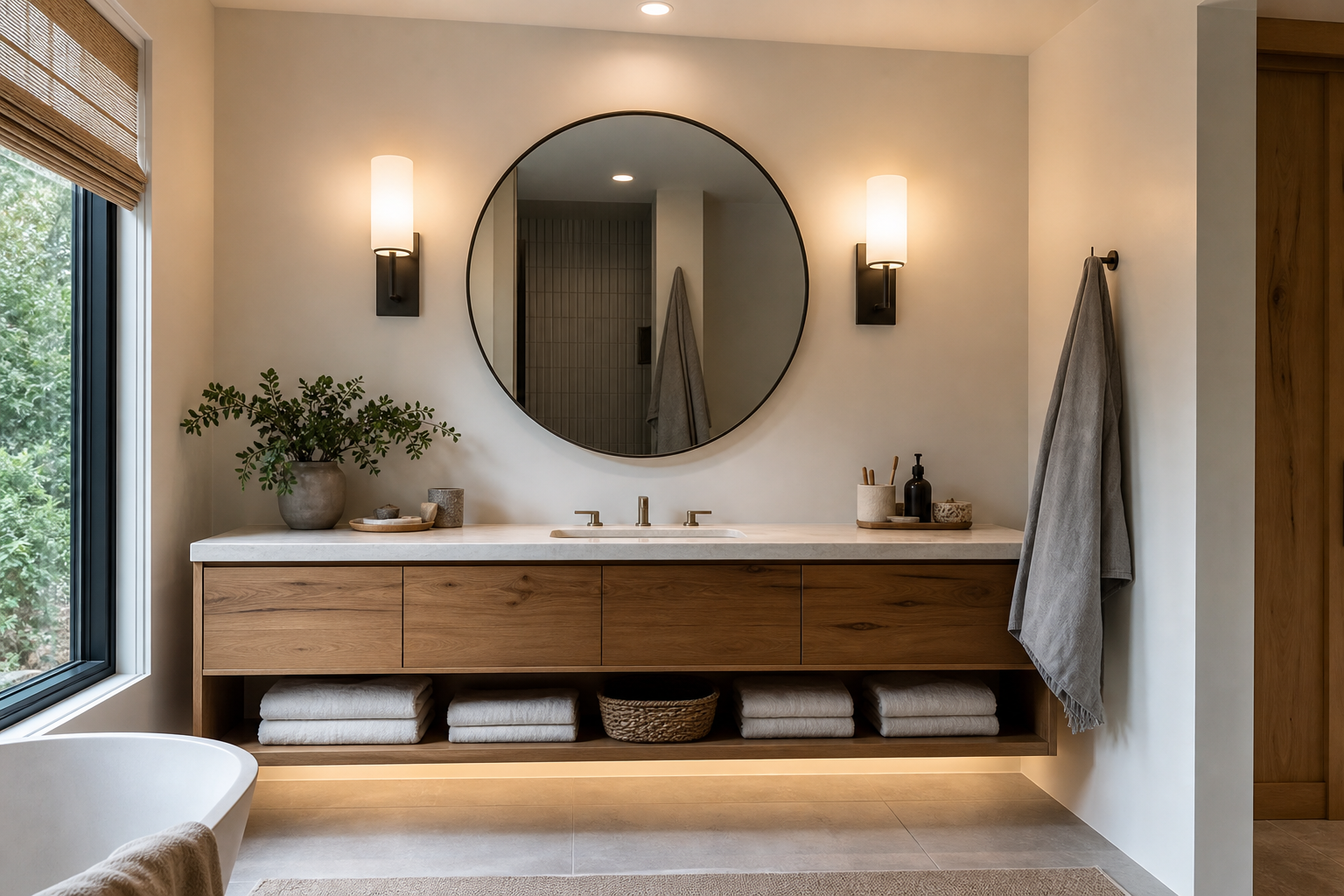
A well-scaled mirror expands reflected light and becomes a focal point. Check that it clears the faucet, backsplash, outlet covers, and light fixture. Side lighting generally reduces facial shadows, while an overhead fixture can be a practical compromise in a narrow wall. Use damp-location-rated products where required.
Electrical changes are not decorative DIY when wiring, boxes, grounding, or wet-location rules are uncertain. A licensed electrician can correct an undersized box or unsafe placement. For a no-wire makeover, update the mirror and lamp color temperature while keeping the listed fixture intact.
Add storage without shrinking the room
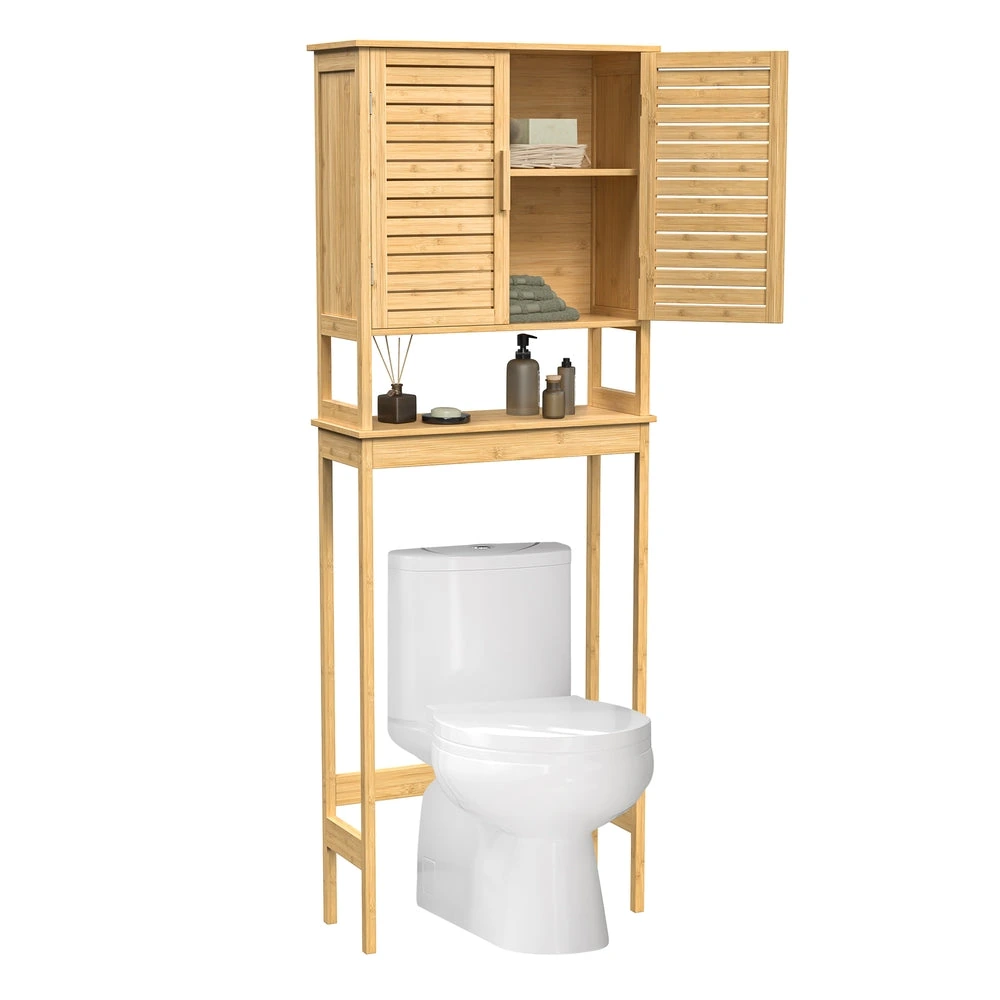
Powder rooms need only modest storage: extra tissue, hand towels, soap, and cleaning essentials. A slim vanity drawer, recessed cabinet, or shallow shelf can be enough. Keep projecting shelves away from the door path and from where a seated or standing user could strike them.
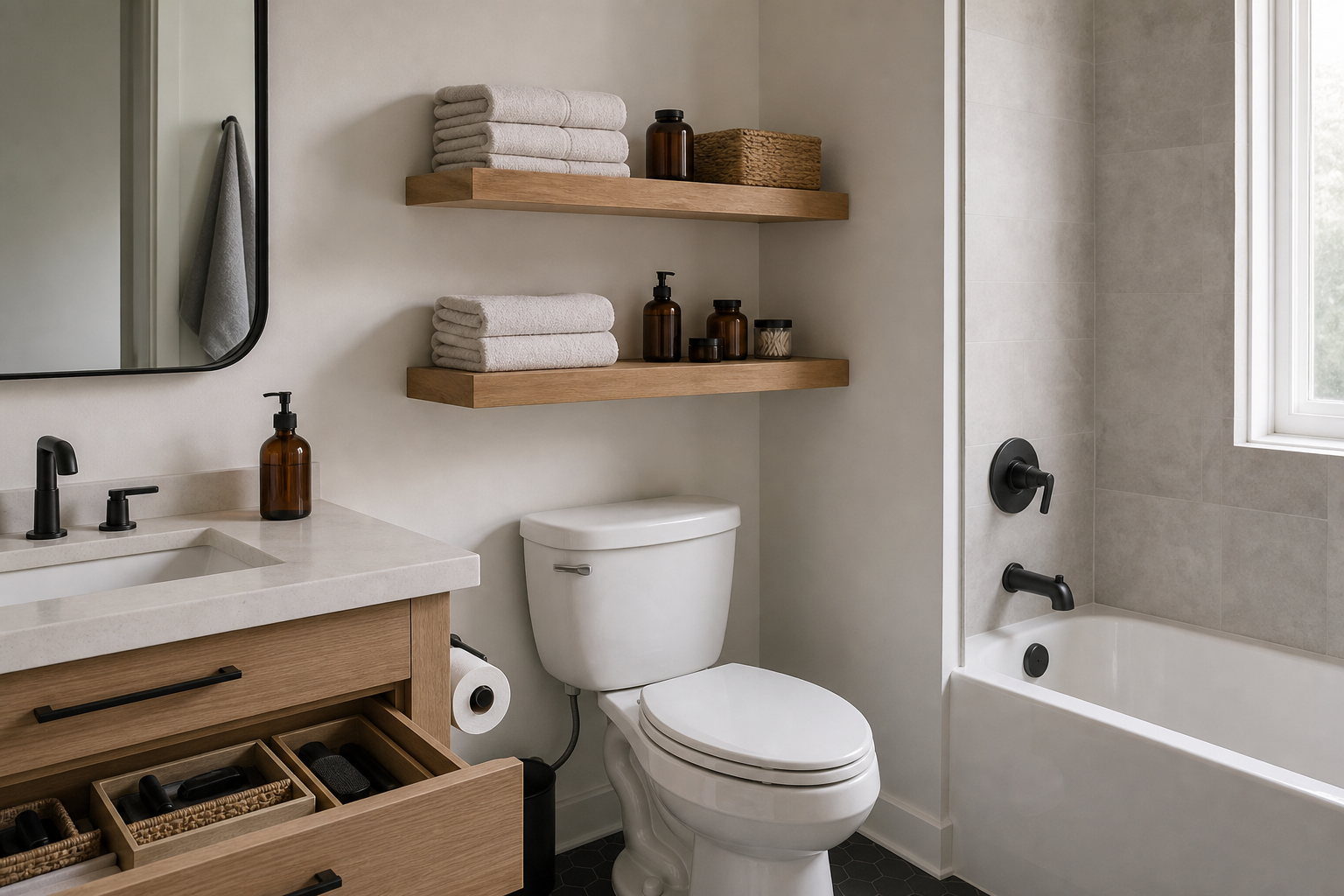
Closed storage reduces visual noise, while one open shelf can hold a small tray and spare towel. Anchor shelves into studs or use fasteners rated for the wall and load. Do not drill blindly near plumbing or wiring; use plans, cautious detection, and professional help when routes are uncertain.
Plan a realistic budget and sequence
Divide spending into repair, fixed fixtures, finishes, and accessories. Reserve a contingency for shutoff valves, damaged wall surfaces, delivery issues, and missing hardware. Compare total installed cost rather than the sticker price: a bargain vanity may require plumbing changes, a new top, and disposal.
Work in order: investigate moisture, complete licensed plumbing or electrical work, repair walls, paint or paper, install fixed pieces, then style. This sequence protects new finishes and avoids removing the same item twice. Save receipts and unopened returnable materials until the room has been tested.
Avoid the most common makeover mistakes
Do not cover active moisture damage, block ventilation, crowd the toilet, or install a mirror solely by appearance without checking scale. Mixing several dominant patterns makes the room feel smaller. Buying fixtures before measuring rough-ins creates expensive returns and compromises.
Test every valve, drain, outlet, light, and door after work. Run the faucet, fill and drain the basin, then inspect with a dry tissue under connections. A polished room is not finished until it operates safely and remains dry.
Three makeover approaches at different commitment levels
For a one-weekend refresh, keep every fixed fixture and concentrate on cleaning, patching, paint, a mirror, towels, and one useful accessory. This approach is best for a sound room with functional lighting and plumbing. It limits surprises because shutoffs, drains, wiring, flooring, and wall cavities remain untouched. Spend first on preparation supplies and a durable finish; decorative pieces can be added gradually after the color is visible in the room.
A medium-commitment makeover can include wallpaper, a repainted vanity, replacement hardware, and a like-for-like faucet or light handled according to local rules. Measure rough-ins and clearances before ordering, and schedule licensed trades before finish work where needed. Choose products with return windows that allow inspection. Lay out the mirror, paper pattern, and hardware on the wall with removable tape so scale problems appear before holes or adhesive make them expensive.
A higher-commitment cosmetic project may replace the vanity, countertop, lighting, and flooring without relocating the room. Although the layout remains, this level can expose damaged subfloor, corroded valves, irregular walls, or outdated electrical work. Build a contingency and define who handles disposal, permits, paint touch-ups, and plumbing reconnection. If a proposal moves drains, opens structural walls, or alters circuits, treat it as renovation work and use qualified professionals rather than stretching a decorative makeover beyond safe limits.
Quick-reference checklist
| Priority | Practical choice |
|---|---|
| Lowest-cost impact | Paint walls or vanity |
| Strongest focal point | Wallpaper or statement mirror |
| Better function | Lighting and modest closed storage |
| Renter-friendly route | Removable accessories with approval |
| Stop and call a pro | Leaks, unsafe wiring, failed shutoffs |
Frequently asked questions
What is the cheapest powder room makeover?
Deep cleaning, wall repair, paint, a better mirror, coordinated hardware, and fresh towels can change the room while keeping plumbing and electrical locations untouched.
Can peel-and-<a href="/products/nuwallpaper-gray-woods-nu1412/" class="product-inline-link">stick wallpaper</a> work in a powder room?
It may work on a smooth, sound, properly cured surface with reasonable humidity. Check the manufacturer’s limits and test a sample; it is not a cure for damp walls.
Should all metal finishes match?
They do not have to match exactly, but limiting the palette helps. Repeat each intentional finish and avoid several near-matching tones that look accidental.
Can I replace a powder-room faucet myself?
Some homeowners can replace a like-for-like faucet where permitted and where sound shutoffs work. Stop for corroded piping, leaking valves, uncertain connections, or code requirements.
How do I make a tiny powder room look larger?
Use clear visual hierarchy, adequate lighting, a well-scaled mirror, uninterrupted floor area, and shallow storage. Reducing clutter often matters more than choosing white everywhere.



Share your results
Reader transformations
Have you tried this makeover? Share your experience below.