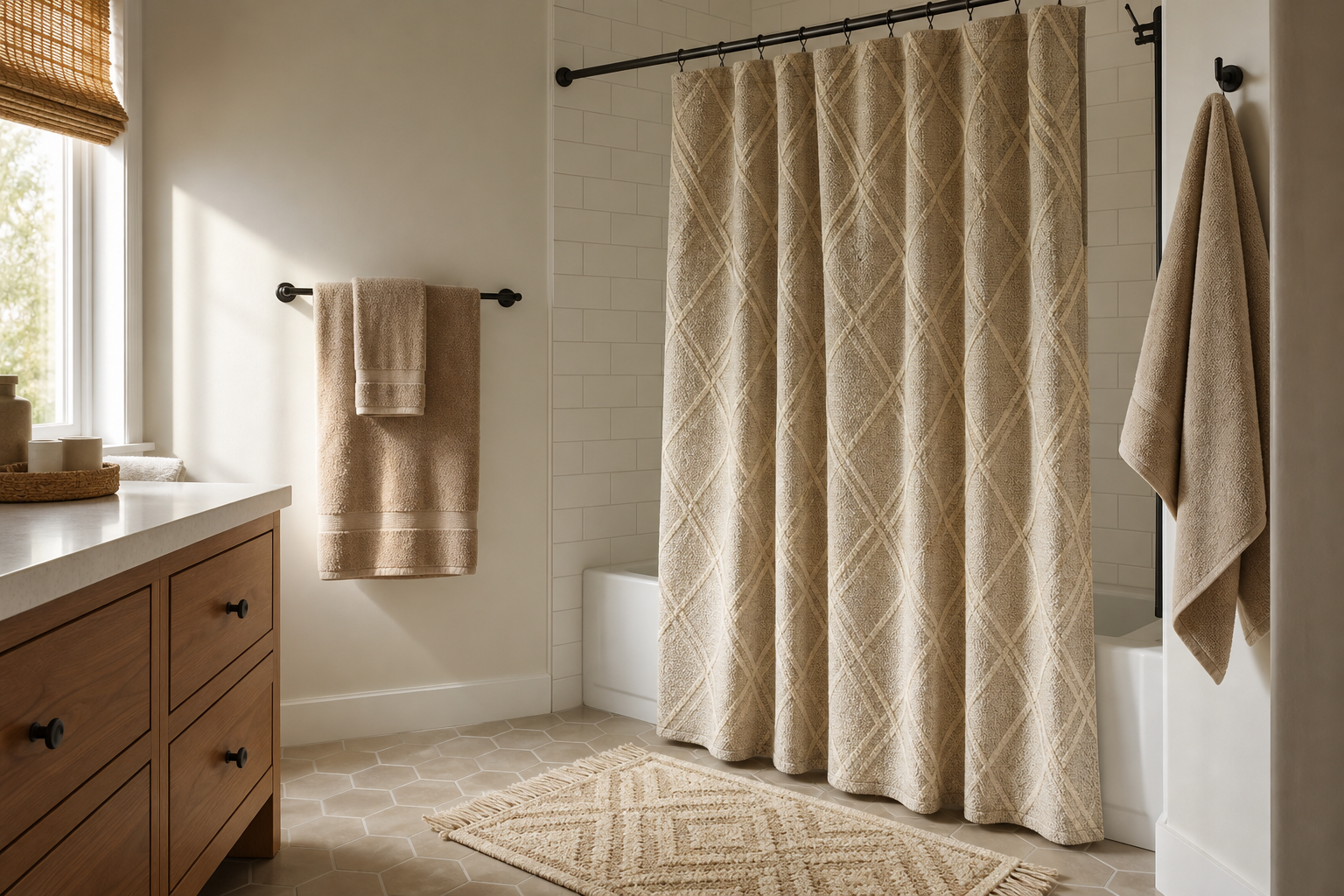
The best shower curtains for a bathroom update are the ones that improve proportion, light, and maintenance at the same time. For most rooms, start with a washable fabric curtain in a scale and color that complements the tile, hang it close to the ceiling, and pair it with a separate water-resistant liner. This creates a tailored look without committing to permanent renovation.
A curtain is also a practical design tool. It can soften hard surfaces, conceal an older tub, introduce pattern, and make a low ceiling feel taller. Before shopping, measure the opening and rod height rather than assuming the common size will fit. Material, opacity, hem weight, liner system, and washing instructions matter as much as the print.
Measure Before Choosing a Style
Measure the rod width, the distance from rod to the desired hem, and the clearance above the tub floor. A curtain should have enough width to form relaxed folds when closed, not stretch flat across the opening. The hem should remain inside the tub during use without dragging in standing water. Extra-long curtains work well with a higher rod, but only when ceiling height and ventilation allow.
Check whether the rod can move. A tension rod is renter-friendly but needs sound parallel walls and should not carry excessive weight. A permanently mounted rod is more secure but requires correct anchors and awareness of hidden plumbing or wiring. If drilling near a shower, use the appropriate bit, waterproof penetrations, and stop if the wall construction is uncertain.
Choose Material Based on Maintenance
Cotton and linen-blend outer curtains have a residential, drapery-like look, but they absorb moisture and generally need a liner. Polyester fabric dries faster and often resists wrinkles, making it practical for a busy bathroom. Vinyl-like single-layer curtains are inexpensive and water resistant, though some feel stiff and may be harder to launder. Always follow the product care label.
In a humid room, washable construction is more valuable than elaborate trim. Look for reinforced holes, a durable lower hem, and fabric that can be removed without dismantling the rod. A separate washable shower curtain liner lets you refresh the wet-side layer while keeping the decorative curtain.
Use Color to Change the Room’s Proportions
White, cream, pale gray, and low-contrast patterns preserve reflected light in a windowless bath. Dark colors can create depth and drama but may visually narrow a small alcove, especially when the curtain stays closed. Repeating one existing color from tile, paint, or towels produces a more intentional update than introducing several unrelated accent colors.
If the room already contains patterned floor tile, choose a quieter curtain with texture or a restrained stripe. With plain tile and simple fixtures, a larger botanical, geometric, or block-print motif can become the focal point. Order a swatch when available because screen colors and fabric opacity change under warm bathroom lighting.
Pick a Pattern Scale That Fits the View
Large motifs need enough uninterrupted fabric to read clearly; they can look energetic in a compact room but may become chaotic beside busy tile. Small repeated patterns disguise wrinkles and splashes, while vertical stripes emphasize height. Horizontal bands can widen a narrow end wall, though their alignment becomes obvious if the rod is not level.
Consider the curtain both open and closed. When open, most of the design compresses into folds, so a border pattern may disappear. When closed, a scenic print dominates the room. Neutral texture—waffle weave, slub, or subtle dobby—is a safer choice when you change towels and accessories seasonally.
Hang It Higher for a More Finished Look
Raising the rod can visually lengthen the wall and make the shower enclosure feel deliberate. Leave enough space for air circulation and make sure the chosen curtain reaches the tub correctly. Extra-long sizes are useful, but do not let fabric pool on the bathroom floor where it stays damp and collects dust.
Use rings that glide smoothly and are strong enough for both curtain and liner. Double-sided or double-hook rings simplify liner removal. A rust-resistant shower curtain ring set is a small upgrade, but verify dimensions and finish rather than relying on marketing language alone.
Select a Liner That Works With the Curtain
The liner belongs inside the tub and should be wide enough to contain spray at both ends. Fabric liners are easy to launder but vary in water repellency; polymer liners shed water readily but may need wiping and eventual replacement. Magnets only work with compatible tubs, and strong weights are not a substitute for correct width and placement.
Avoid doubling bulky layers in a poorly ventilated shower. Spread the curtain and liner after use so folds can dry. If the shower head sprays toward the opening, correct its angle or replace a worn head before blaming the curtain. Water escaping onto the floor can create slip risk and hidden damage.
Best Curtain Approaches by Bathroom Type
| Bathroom | Good starting choice | Why it works |
|---|---|---|
| Small, windowless bath | Light washable fabric, subtle vertical pattern | Preserves light and adds height |
| Colorful vintage tile | Solid curtain matching a minor tile tone | Calms the palette |
| Plain rental bath | Removable bold print with separate liner | High impact, reversible |
| Family bathroom | Fast-drying washable polyester | Easier routine care |
| Spa-inspired room | Textured neutral fabric | Adds softness without visual noise |
This table is a starting point, not a rigid rule. Test the idea against the room’s permanent elements: tile undertone, metal finishes, vanity color, and available light. A curtain that looks understated online can become a wall-size color block once installed.
Mistakes That Make an Update Look Unfinished
The most common mistake is incorrect length. A too-short curtain exposes an awkward strip of tub; an overlong one drags and stays wet. Other problems include thin fabric without sufficient fullness, mismatched liner length, too few rings, and a rod mounted visibly out of level. Measure twice and steam or wash the curtain according to instructions before judging its final drape.
Do not rely on “mildew resistant” claims as a substitute for cleaning and ventilation. Avoid adhesive hooks or improvised rods that could fall into the tub. If the wall is soft, cracked, or repeatedly wet around the mount, address the moisture problem before installing hardware.
Build a Cohesive Update Around the Curtain
Repeat one curtain color in two small elements, such as towels and a soap tray, rather than buying a full matching set. Keep metals consistent where possible, but minor mixed finishes can work when repeated intentionally. A <a href="/products/bambusi-foldable-bamboo-bath-mat/" class="product-inline-link">bath mat</a> should coordinate without duplicating the exact print, which often feels overly themed.
Good lighting completes the change. Evaluate the curtain in daytime and at night; a warm bulb can turn cool white fabric yellow, while a high-quality neutral bulb reveals color more accurately. Keep portable lamps and non-rated electrical products out of bathrooms. Electrical fixture changes in wet locations require suitable ratings and often a qualified electrician.
Care and Replacement
Wash the curtain and liner on the schedule allowed by their labels, using gentle products and thorough drying. Wipe the rod and rings, where residue often collects unnoticed. Keep the liner spread after bathing and run the exhaust fan during and after showers if it vents outdoors.
Replace a liner that is cracked, permanently stained, or no longer shedding water. A decorative curtain can last through several room updates if its seams, holes, and color remain sound. Changing only rings, liner, towels, or rod height may restore the look without discarding usable fabric.
Frequently Asked Questions
Should the shower curtain touch the floor?
No. It should hang neatly without dragging on the bathroom floor. The liner should remain inside the tub or shower base while staying clear of pooled water.
Is fabric or plastic better?
Fabric usually looks softer and is often washable; polymer liners shed water more directly. Many bathrooms work best with a decorative fabric outer curtain plus a compatible liner.
How wide should a shower curtain be?
It should exceed the opening width enough to form folds when closed. Measure the actual rod span and follow the manufacturer’s sizing rather than assuming one standard fits every enclosure.
Can renters install a higher rod?
A correctly fitted tension rod may provide a reversible option if walls are sound and parallel. Avoid drilling without permission and never overload a tension rod.
Bathroom Safety Checks Before You Finish
Keep the curtain and liner fully inside the tub during use, dry any water on the floor immediately, and use a nonslip bath mat that lies flat without blocking doors. Confirm that the rod and rings are secure before relying on them; a shower curtain rod is not a grab bar and must never be used for body support. If the wall is soft, cracked, or damp, repair the moisture source before mounting hardware.
Keep all portable electrical devices, cords, and non-rated lights away from the tub and sink. Do not drill near concealed plumbing or wiring unless the route is known and the mounting method is appropriate. Persistent leakage around the enclosure, damaged wallboard, mold growth, or an unstable rod calls for maintenance or professional repair rather than a decorative workaround.




Share your results
Reader transformations
Have you tried this makeover? Share your experience below.