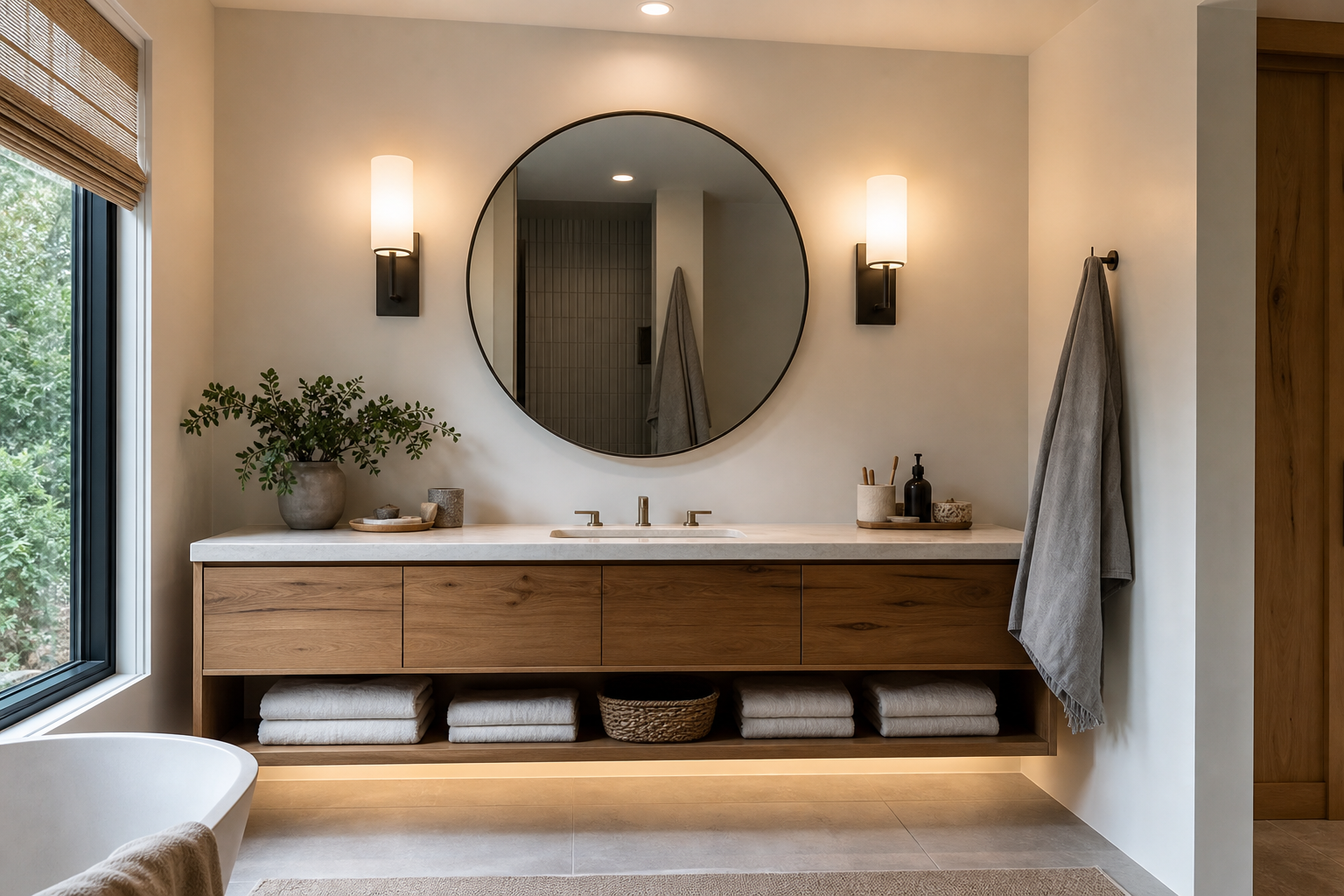
The strongest bathroom lighting upgrade ideas do more than replace one fixture. They combine clear face lighting at the mirror, comfortable ambient light for the room, and focused illumination where needed, all with fixtures and controls suitable for a damp location. Start by identifying shadows, glare, dark corners, and color problems before buying decorative hardware.
Electrical work in a bathroom carries higher risk because water and grounded surfaces are nearby. Bulb swaps and plug-in changes outside restricted zones may be simple, but new wiring, moved junction boxes, added shower lights, or uncertain grounding should be handled by a licensed electrician under local requirements. Never install an indoor dry-location fixture simply because it fits the style.
Audit the Existing Light Before Shopping
Use the room at morning, evening, and nighttime. Stand at the mirror and note whether light comes mainly from overhead, creating shadows beneath the eyes and chin. Check the shower, storage, and toilet area for dark patches. Photograph the room with a consistent camera exposure if that helps compare changes, but trust visual comfort rather than an automatically brightened phone image.
Record fixture locations, switch functions, ceiling height, ventilation, mirror width, and visible junction boxes. Read labels only with power safely off when required. If lights flicker, switches feel hot, breakers trip, or corrosion appears inside a fitting, stop and request an electrical assessment rather than masking the symptom with new bulbs.
Upgrade Mirror Lighting First
Vertical sconces on both sides of the mirror usually provide more even face illumination than one small ceiling light. When side mounting is impossible, a wide vanity bar centered above the mirror can work if it projects light outward rather than straight down. Avoid exposed high-brightness bulbs at eye level, which create glare without improving detail.
Scale the fixture to the mirror and leave safe clearance from water. An integrated-light mirror can simplify the visual field, but consider replaceability: if the LED driver fails, service may be less straightforward than changing a bulb. Compare a damp-rated bathroom vanity light by dimensions, listing, and light quality—not photos alone.
Layer Ambient and Task Light
Ambient light should make the room navigable without overpowering the mirror. A central flush mount, several correctly spaced recessed fixtures, or indirect cove lighting can fill the room. Task light should then serve grooming, showering, or storage. Connecting every source to one switch often produces too much light late at night and too little flexibility.
Separate controls allow a calm ambient scene and a brighter grooming scene. Dimmers can help when they are compatible with the LED lamps and drivers; incompatible combinations may flicker, buzz, or fail to dim smoothly. A qualified installer can verify load, neutral requirements, box fill, and local code constraints.
Choose Color Temperature and Rendering Carefully
Warm-neutral light often feels flattering in a bathroom, while very cool light can make skin and finishes appear harsh. More important than chasing one number is consistency: mixing strongly warm sconces with a cool ceiling fixture makes tile and paint change color across the room. Buy one lamp first and test it against the mirror, wall color, and daylight.
Choose lamps with good color rendering so makeup, clothing, towels, and skin tones look natural. Manufacturers describe performance differently, so compare specifications and return policies. If the fixture has an integrated LED, confirm its color temperature before installation because it may not be changeable later.
Use Wet- and Damp-Location Ratings Correctly
Bathrooms are not one uniform environment. A fixture away from direct spray may need a damp-location rating, while equipment over or within a shower zone can require a wet-location listing and additional code-specific protection. The fixture label and installation instructions—not its appearance or seller category—determine suitability.
Do not move a decorative pendant over a tub or run flexible LED strips near water without confirming listing, placement, voltage, driver location, and code. Ground-fault protection and bonding rules are life-safety measures. When boundaries are unclear, have an electrician map the zones and select compliant equipment.
Improve a Rental Without Rewiring
Renters can often make meaningful changes by installing better compatible bulbs, cleaning shades, using a lighter shower curtain, and adding a rechargeable light inside a dry cabinet—subject to lease terms and product instructions. Store the original bulbs and obtain written permission before replacing any hardwired fixture.
Avoid extension cords, plug-in pendants, and portable lamps near sinks or tubs. Adhesive battery lights should not be placed where heat, steam, or falling hardware creates risk. A high color-rendering LED bathroom bulb can be useful when its base, wattage equivalent, enclosure rating, and dimmer compatibility match the existing fixture.
Highlight Storage and Architectural Features
A small amount of light inside a deep cabinet can make storage easier to use. Under-vanity lighting can provide a low nighttime glow, while a wall wash can emphasize tile texture. These effects should remain secondary to functional light; visible diode dots, tangled wiring, and mismatched colors quickly make an update look improvised.
Plan where drivers, transformers, and wiring will live before purchasing strip systems. Components need ventilation and access for service while remaining protected from moisture. Hardwired accent lighting belongs in the electrical plan, not added as an afterthought behind finished cabinetry.
Quick Planning Table
| Problem | Upgrade to consider | Watch for |
|---|---|---|
| Shadows at mirror | Side sconces or wide vanity bar | Eye-level glare and water clearance |
| Dim shower | Properly listed shower light | Wet-location and code requirements |
| Harsh nighttime light | Separate dimmable ambient layer | LED/dimmer compatibility |
| Colors look wrong | Consistent, high-quality lamps | Mixed color temperatures |
| Dark cabinet | Listed integrated cabinet light | Driver access and heat |
Prioritize the problem you actually experience. Replacing a decorative ceiling fixture may have little effect if the face remains shadowed. Conversely, adding very bright mirror lighting without ambient balance can make the rest of the room feel darker by comparison.
Common Upgrade Mistakes
Buying by fixture width alone is a mistake; depth, glare control, lumen output, and mirror relationship also matter. Other errors include selecting a dry-rated fixture, blocking a cabinet door, placing sconces unevenly, mixing finishes accidentally, and assuming an LED is automatically dimmable. Read the full specification sheet before the return period ends.
Do not cover junction boxes, splice wires outside approved enclosures, defeat grounding, or install oversized lamps that exceed fixture limits. Paint and wallpaper should not trap heat around fittings. If a mirror move exposes damaged wall or old wiring, pause the cosmetic project until the substrate and electrical system are safe.
When an Electrician Is the Right Choice
Hire an electrician to add or relocate fixtures, install new circuits or controls, investigate faults, work in shower zones, or correct ungrounded and deteriorated wiring. Older bathrooms may reveal crowded boxes, aluminum conductors, missing protection, or circuits shared in ways that affect the upgrade. Permits and inspection may apply.
Provide the electrician with fixture specifications and a sketch of mirror, cabinet, and door clearances. Ask how switching, dimming, ventilation, and service access will work. Coordinating before tile or paint is far less disruptive than discovering a junction box conflicts with the mirror after finishes are complete.
A Sensible Upgrade Sequence
First correct safety or fault issues. Second, improve mirror task lighting. Third, balance the room with ambient light. Fourth, add accent or night lighting only if it serves a real need. Test lamp color before duplicating it, and label controls so guests can use the room without switching on every source.
After installation, check for glare from seated and standing positions, inspect reflections, confirm smooth dimming, and verify that doors and cabinets clear fixtures. Keep model and lamp information with home records. A successful plan feels easier to use, not merely brighter.
Frequently Asked Questions
What color temperature is best for a bathroom?
A consistent warm-neutral or neutral white often works well, but test it with the room’s finishes and daylight. Good color rendering and glare control matter as much as the nominal temperature.
Can I put any ceiling light in a bathroom?
No. The fixture must have the appropriate location rating and be installed in a permitted position. Shower and tub zones can have stricter requirements.
Are LED mirrors enough to light the room?
Some provide useful face light, but many are better as one layer. The room may still need ambient light, and product output and replaceability vary.
Can I change a vanity fixture myself?
Only if local rules permit it and you can verify safe isolation, wiring, grounding, box support, and location rating. If any part is uncertain, use a licensed electrician.



Share your results
Reader transformations
Have you tried this makeover? Share your experience below.