
A nightstand can change how a bedroom looks and functions without paint, demolition, or a large furniture budget. The best nightstands for a bedroom refresh are not simply the most fashionable models: they fit the height of the mattress, provide the storage you actually use, leave comfortable circulation space, and support lamps and charging safely.
Start by measuring rather than shopping by appearance. A compact wall-mounted shelf may be ideal in a narrow rental, while a deep three-drawer chest can overwhelm the same room. The right choice should make bedtime routines easier and connect the bed visually to the rest of the space.
Measure the Bed, Wall, and Walking Path First
Measure from the floor to the top of the mattress with the bed made. A nightstand top near mattress height is usually easiest to reach; several inches higher or lower can still work, but a dramatic mismatch makes a glass of water, lamp switch, or phone awkward to access. Record the available wall width on each side and note baseboards, outlets, vents, curtains, closet doors, and bed-frame projections.
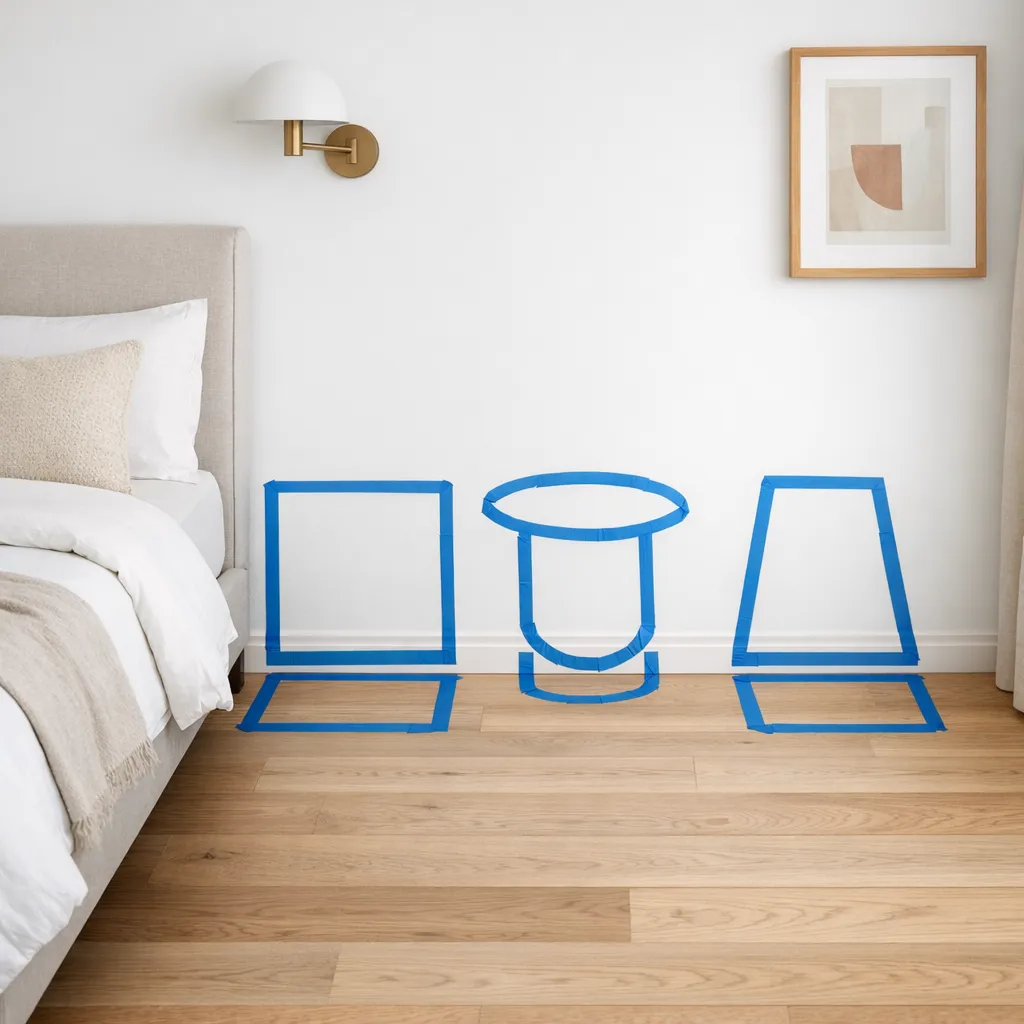
Preserve a usable walkway. In a tight room, mock up the proposed footprint with painter's tape and open every nearby drawer and door. A listing's width is not enough: depth determines how far furniture extends into the path, while drawer pulls add projection. If a room needs broader space-planning help, the measuring principles in these small living room transformation ideas transfer well to bedrooms.
Decide What the Nightstand Must Hold
List the items that genuinely live bedside: lamp, book, glasses, medication, water, tissues, phone, or CPAP equipment. Then distinguish what should remain visible from what should be concealed. An open shelf makes books easy to reach but exposes cords and clutter. One drawer hides small essentials without encouraging excess storage. Three drawers can replace a small dresser, though the cabinet will be heavier and visually denser.
Check the usable top dimensions, not just the overall dimensions. Raised edges, decorative trim, and lamp bases consume space. Medical equipment needs ventilation and manufacturer-specified clearances; do not enclose heat-producing devices in an unventilated cabinet. If children can access medication, a lockable solution located according to safety guidance is more important than style.
Compare the Best Nightstand Types
One-drawer tables

A one-drawer table is the flexible default. It offers a clear top, a place for small objects, and an open lower shelf for books or a basket. Slim legs keep a modest room feeling open. The tradeoff is limited hidden storage and more visible dust beneath it.
Drawer chests
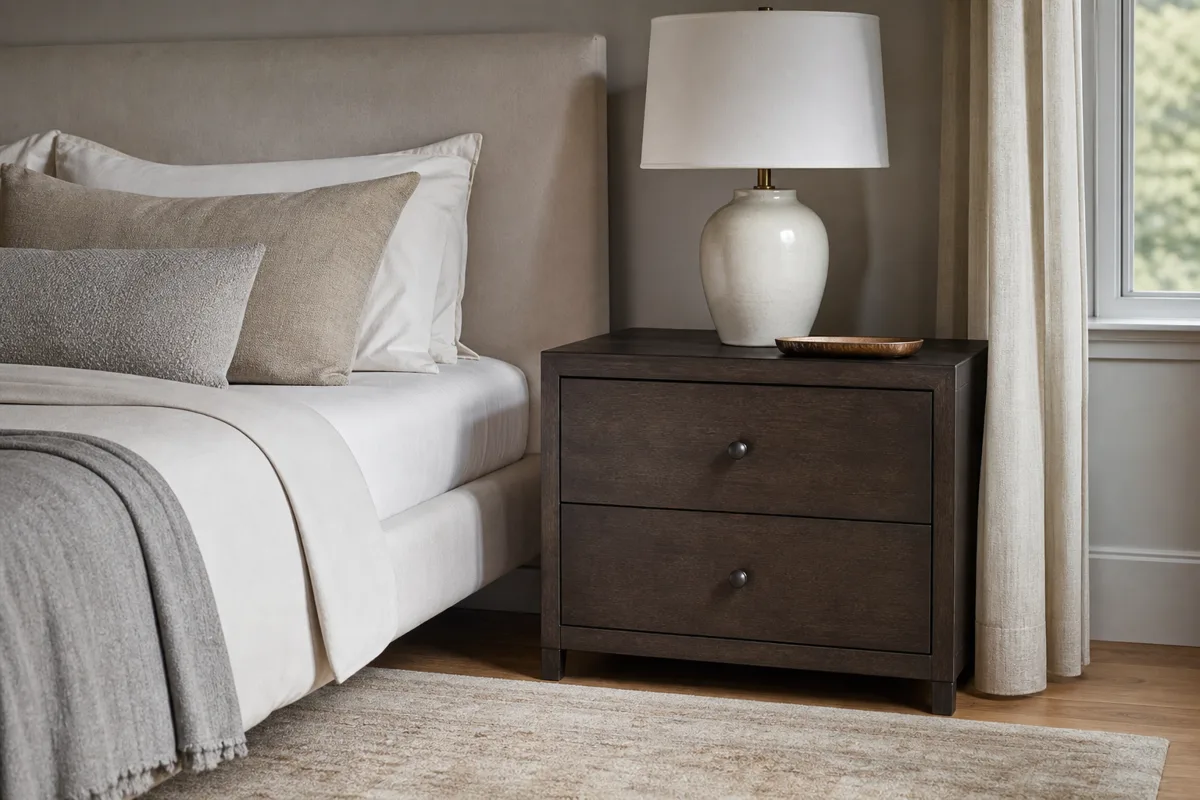
A two- or three-drawer nightstand suits readers, small bedrooms lacking dresser space, and anyone who prefers visual calm. It provides substantial storage but can feel blocky. Confirm that drawers open smoothly and cannot collide with bedding or a wall.
Wall-mounted shelves
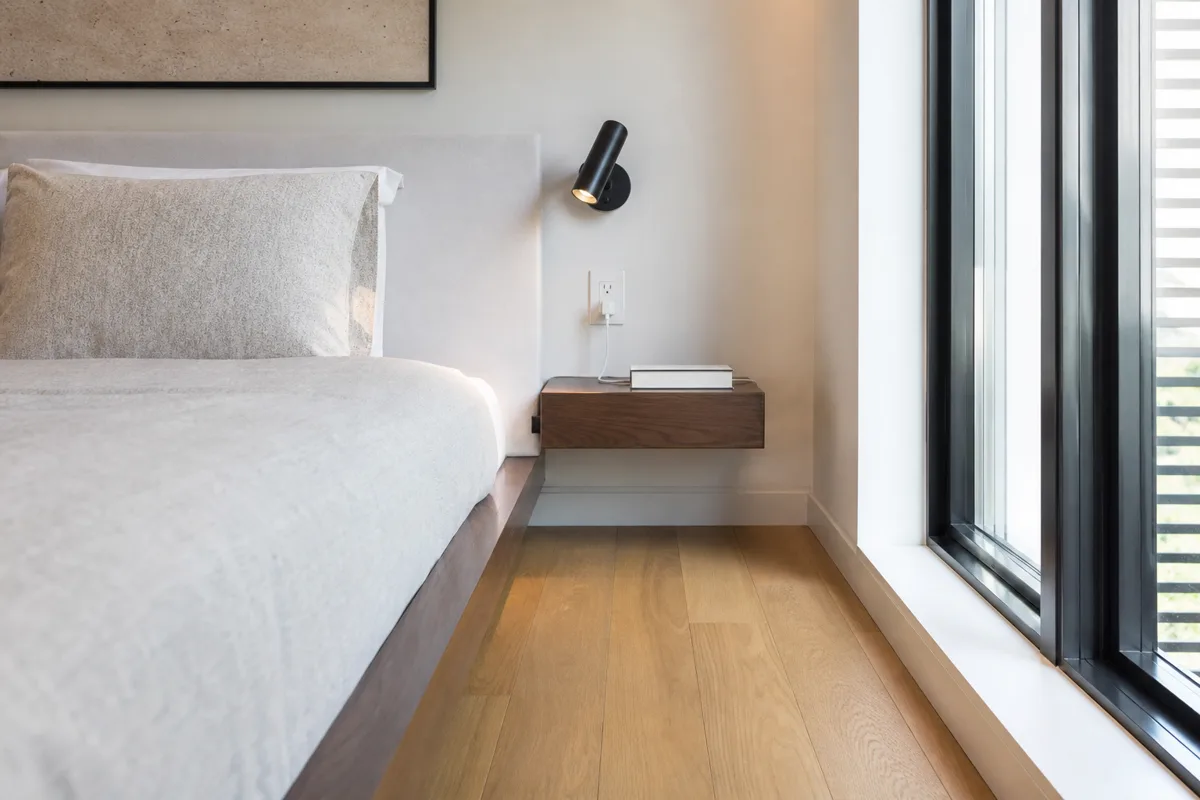
A floating shelf preserves floor area and makes cleaning easier. It works particularly well beside platform beds and in very narrow rooms. Installation is the limitation: it must be anchored correctly for the wall type and expected load, and renters need permission before drilling.
Use This Quick Selection Table
| Bedroom need | Strong option | Main tradeoff |
|---|---|---|
| Narrow walkway | Shallow pedestal or floating shelf | Minimal storage |
| Clutter control | Two-drawer cabinet | More visual weight |
| Rental flexibility | Freestanding one-drawer table | Occupies floor space |
| Uneven floor | Adjustable-foot model | Hardware may be visible |
| Shared bedroom | Coordinated, not necessarily identical, pair | Requires common scale or finish |
| Frequent charging | Open-back shelf with cable management | Cords require careful routing |
The table is a starting point rather than a rule. A stool can work for a guest room with few needs, while a compact filing cabinet might provide useful storage in a multipurpose room. Evaluate stability, dimensions, materials, and return terms before relying on a product photograph.
Choose Materials for Durability and Maintenance
Solid wood can be repaired and refinished, but construction quality and movement matter more than the label alone. Veneered plywood can be stable and attractive. Medium-density fiberboard offers smooth painted surfaces at accessible prices, although swollen edges are difficult to repair after water damage. Metal is durable and visually light but may sound harsh when objects are set down. Glass opens sight lines but shows dust and requires careful handling.
Read care instructions and use a coaster or tray. If shopping online, examine close-ups of drawer joinery, back panels, slides, and underside construction. A solid wood one-drawer nightstand search can help compare dimensions and configurations, but verify the stated material rather than assuming “wood finish” means solid lumber.
Coordinate Without Buying a Matching Set
Nightstands do not need to match the bed exactly. Repeating one feature—wood tone, metal color, leg shape, or hardware finish—creates cohesion without making the room feel like a showroom. A heavy upholstered bed balances well with nightstands that have enough visual mass; a delicate metal frame may pair better with open-legged tables.
In a shared bedroom, mismatched pieces can still feel intentional if their tops are close in height and lamps provide a repeated element. Paint is another unifier. The approach used when selecting the best paint colors for a living room makeover also applies here: compare undertones in the actual room and under evening light before committing.
Plan Lighting and Charging Safely
A bedside lamp should fit without crowding essentials or tipping easily. Check that its shade does not interfere with reaching the bed. Wall sconces free the top, but hardwired fixtures require an electrician and plug-in sconces still need secure mounting and tidy cord routing. Never run cords under rugs or pinch them behind furniture.
Integrated USB ports can be convenient, but they may become obsolete before the furniture does. A replaceable, safety-certified power strip mounted according to its instructions can be more flexible. Keep liquid away from electrical connections, do not daisy-chain extension cords, and maintain access to the outlet. Furniture should not crush plugs or block a required vent.

Refresh an Existing Nightstand on a Budget
Before replacing furniture, consider whether new hardware, a repaired drawer slide, removable liner, or careful refinishing would solve the problem. Clean according to the finish, tighten accessible fasteners, and replace missing floor protectors. Renters can use reversible liners and store original knobs for move-out. Painting can transform a sound piece, but surface preparation and a compatible coating determine durability.
Set a spending ceiling that includes delivery, assembly, wall anchors, and returns. Secondhand solid furniture can offer strong value, but inspect it for odor, pests, water swelling, loose joints, and missing parts before bringing it indoors. Budget logic from living room makeover ideas on a budget is useful here: fix the functional bottleneck first, then add decoration.
Avoid Common Buying Mistakes
Do not buy from a styled photograph without checking dimensions. Common failures include a top below the mattress edge, drawers blocked by the bed, a cabinet too deep for the walkway, and an open shelf that cannot hide necessary equipment. Also check delivery-box dimensions; a fully assembled piece may not turn through a narrow stair or doorway.
Avoid unstable designs, sharp projections beside the bed, and furniture that rocks when a drawer opens. Tall, top-heavy units may require anti-tip restraint. Anchor only with hardware suitable for the wall and follow manufacturer guidance. Do not drill where wiring or plumbing may be present; use proper detection methods or hire a qualified installer when the route is uncertain.
Know When Professional Help Makes Sense
Most freestanding nightstands require only careful assembly. Call a professional when installing heavy floating cabinetry, moving an outlet, hardwiring sconces, repairing damaged wall structure, or mounting near uncertain utilities. Electrical alterations belong with a licensed electrician, not a furniture installer improvising a connection.
Professional assembly may also be worthwhile for heavy stone tops, complex drawer systems, or anyone unable to lift safely. Use two people where instructions require it. Clear the path, protect floors, and never balance furniture on books or loose shims. Adjustable feet or proper furniture shims are safer and less visible.
Frequently Asked Questions
Should a nightstand be higher than the bed?
Its top is generally most convenient near the top of the mattress. A modest difference is acceptable if the lamp and essentials remain easy to reach without twisting.
Do both nightstands need to match?
No. Similar height, scale, or one repeated finish can make different pieces look deliberate while allowing each sleeper to choose suitable storage.
What is best for a very small bedroom?
Consider a shallow table, narrow pedestal, or correctly anchored floating shelf. Measure the walking path and preserve access to outlets, closets, and windows.
Are built-in charging ports worth it?
They are convenient but can date the furniture. Verify electrical certification and consider whether a replaceable charging solution offers better long-term flexibility.
How can I make an inexpensive nightstand look better?
Improve alignment, replace compatible hardware, organize cords, add a tray, and repeat a room finish. Good scale and tidy styling matter more than price.
The best purchase is the nightstand that disappears into daily routines: stable, reachable, appropriately sized, and easy to maintain. Measure first, choose storage honestly, and treat electrical and anchoring details as functional requirements rather than afterthoughts.








Share your results
Reader transformations
Have you tried this makeover? Share your experience below.