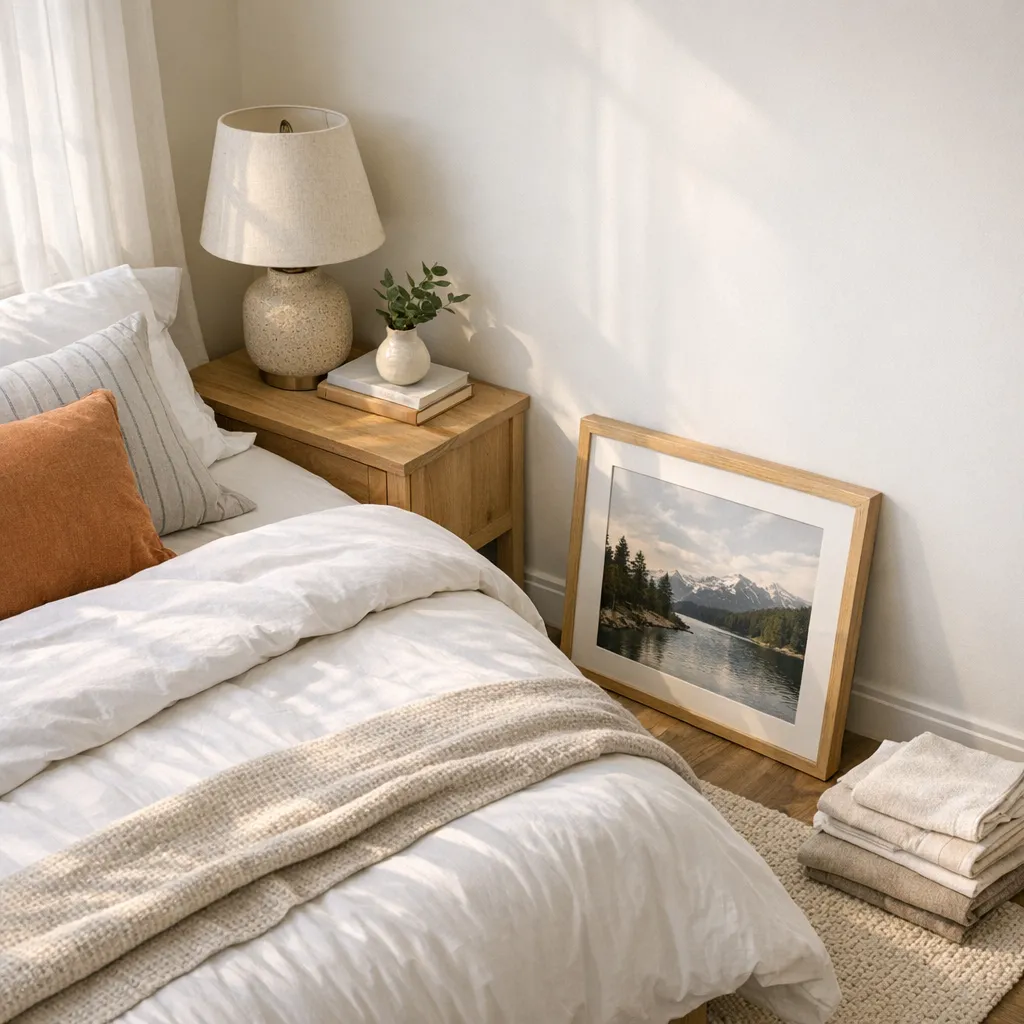
The best guest bedroom makeover ideas begin with comfort and flexibility rather than a theme. A supportive sleep setup, easy lighting, clear surfaces, privacy, and a place for luggage matter more to visitors than a room full of decorative accessories. Start by removing friction, then add color and character in layers you can change without renovating.
For most rooms, the strongest order is simple: measure, edit what is already there, improve the bed, plan lighting, solve storage, and finish with textiles and art. Homeowners can make permanent upgrades where they add value; renters can achieve nearly the same effect with plug-in lighting, removable hardware, and freestanding pieces.
Begin with a guest’s-eye audit
Walk into the room carrying an overnight bag and imagine arriving after dark. Is there a clear route to the bed? Can you set down a phone, find an outlet, close the window covering, and reach a lamp without crossing the room? Sit on the mattress, open drawers, and check whether doors collide with furniture. These observations create a more useful plan than choosing paint first.
Remove broken, overly personal, and surplus items. A guest room should not feel like an overflow closet with a bed in it. Leave visible breathing room on at least one surface and useful empty capacity in a drawer or closet. If the room must serve as an office, hobby area, or storage zone, consolidate that function into one clearly defined wall or cabinet.
Measure the room, bed, door swings, windows, vents, and outlet locations. Make a rough floor plan before buying furniture. A beautiful bench that blocks a closet or a nightstand that prevents a door from opening is not an upgrade. Photograph each wall so you can compare options while shopping.
Set a realistic makeover budget
Divide spending into three levels: essentials, high-impact improvements, and finishing touches. Essentials include a sound bed, safe lighting, privacy, and repairs. High-impact items may include paint, a rug, window treatments, or better bedside tables. Decorative objects belong last because they cannot compensate for an uncomfortable mattress or a room that does not darken at night.
| Budget priority | Spend first | Save or reuse |
|---|---|---|
| Sleep | Mattress support, pillows, washable bedding | Existing bed frame if sturdy |
| Lighting | Bedside light and safe bulbs | Refinish existing lamp bases |
| Privacy | Functional shade or lined curtains | Keep sound existing rods |
| Storage | Luggage stand, hooks, empty hangers | Edit current dresser |
| Style | Paint, one textile, framed art | Repurpose frames and baskets |
Set aside a contingency for small discoveries such as missing curtain brackets, damaged outlets, or wall repair. Avoid buying a coordinated furniture suite just to finish quickly. A mix of compatible pieces generally looks more relaxed and lets you replace one item without remaking the entire room.
Make the bed the comfort anchor
Assess the mattress and foundation before styling. Sagging, noise, unstable slats, or inadequate center support should be corrected. If replacement is not practical, a quality topper may improve a mattress that is merely too firm, but it cannot repair deep sagging or structural failure. Confirm that the frame is stable and that guests can get in and out without squeezing against a wall.
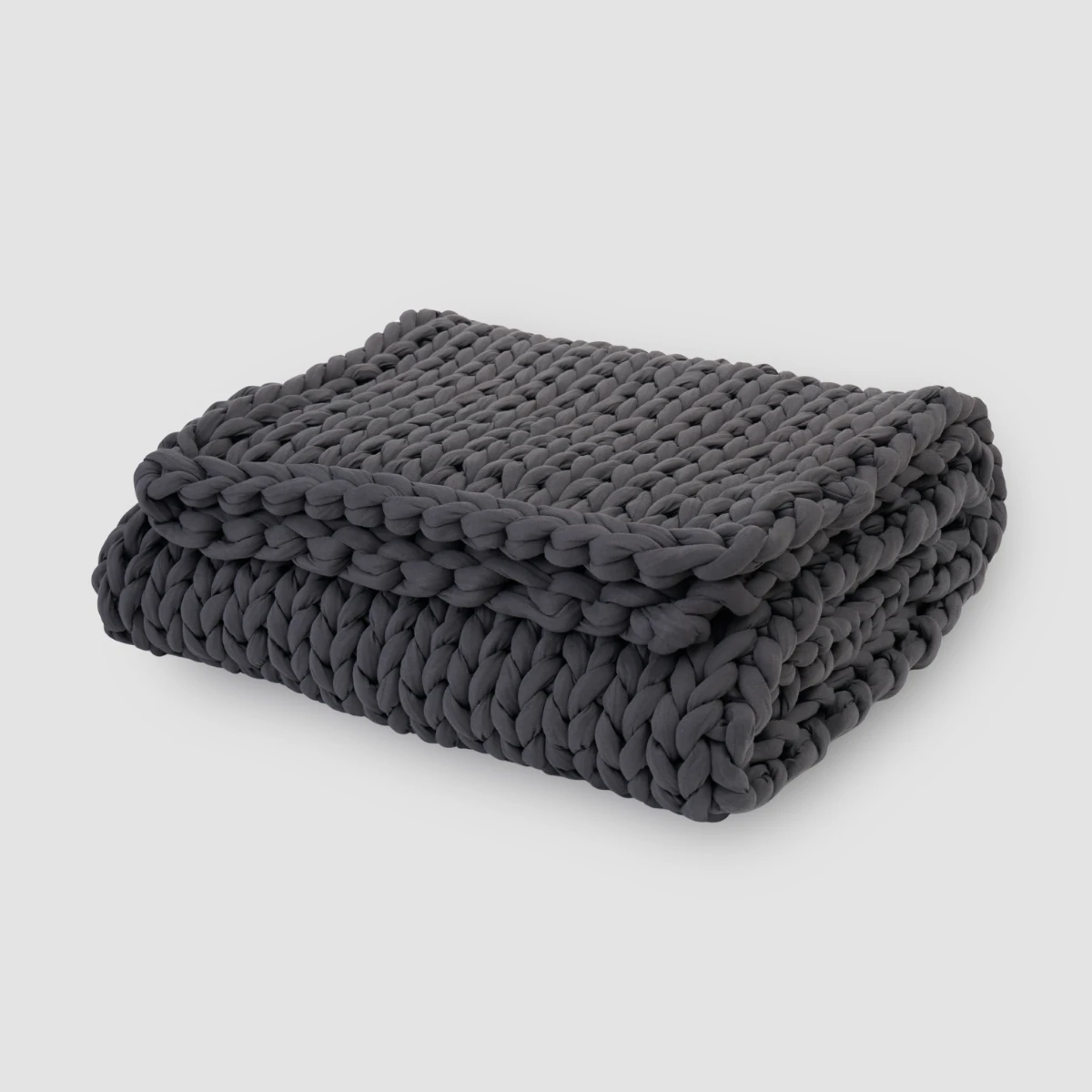
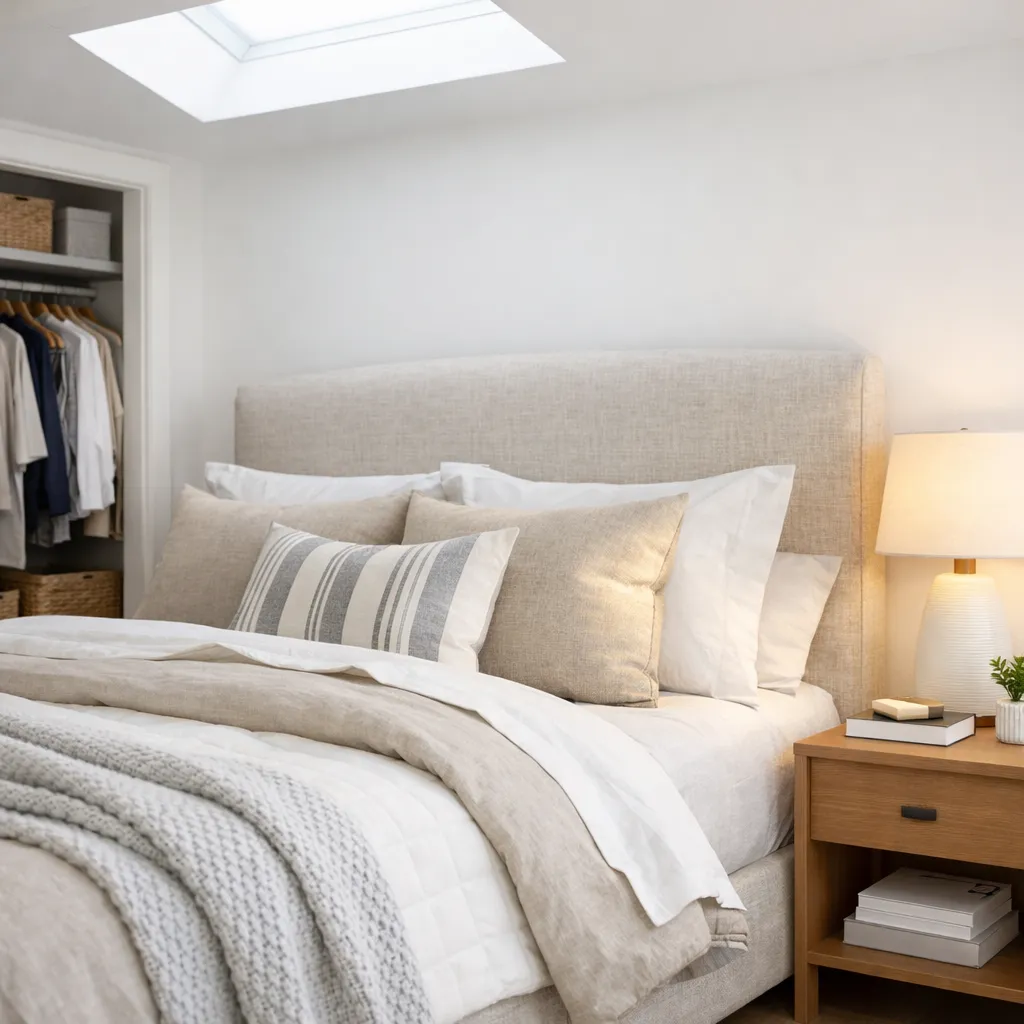
Use washable, breathable layers: fitted sheet, flat sheet or washable duvet cover, a medium-weight blanket, and an extra layer for temperature differences. Two sleeping pillows per side are usually more useful than a pile of decorative cushions. Offer at least two pillow feels when possible, and protect pillows and mattress with washable covers.
A simple washable mattress protector is practical in a multipurpose room. Choose one that fits the mattress depth and does not produce excessive noise. Launder new bedding before use and store spare linens where a guest can find them without searching through private household storage.

Build a calm color and material palette
Choose one quiet base, one supporting color, and one small accent. Warm white with muted blue and natural wood feels fresh; pale clay with cream and black accents feels grounded; soft green with oak and linen feels restful. Repeat each important color at least twice so it appears intentional rather than accidental.
Paint offers a large change for relatively modest cost, but test samples on more than one wall and observe them morning and evening. Renters can use color through a coverlet, curtains, lampshade, removable wall treatment, or framed textile. Check lease terms before painting or applying adhesive products, and test removable materials in an inconspicuous place.
Limit competing wood tones and shiny finishes. They do not need to match, but they should share a temperature or be separated by neutral textiles. Natural-looking materials, matte surfaces, and a few tactile layers usually create more comfort than many tiny themed objects.
Layer lighting for arrival, reading, and dressing
A ceiling fixture alone often creates glare and leaves the bedside dim. Provide ambient light for general use, a focused lamp on each accessible side of the bed, and optional task lighting near a mirror or desk. Use compatible bulbs with similar color appearance so the room does not shift from orange to blue between fixtures.
Bedside switches should be reachable from bed. Plug-in sconces can free small nightstands, while rechargeable lights can work where cords cannot be routed safely. Do not run cords beneath rugs, across walking paths, or through doorways. Replace damaged lamps and loose outlets rather than hiding them behind furniture.
A compact plug-in wall sconce can be renter-friendly when mounted using an approved method. Verify fastener requirements and wall conditions; adhesive mounting is not appropriate for every fixture. If new hardwired lighting or outlet work is needed, use a qualified electrician.
Give guests privacy and control
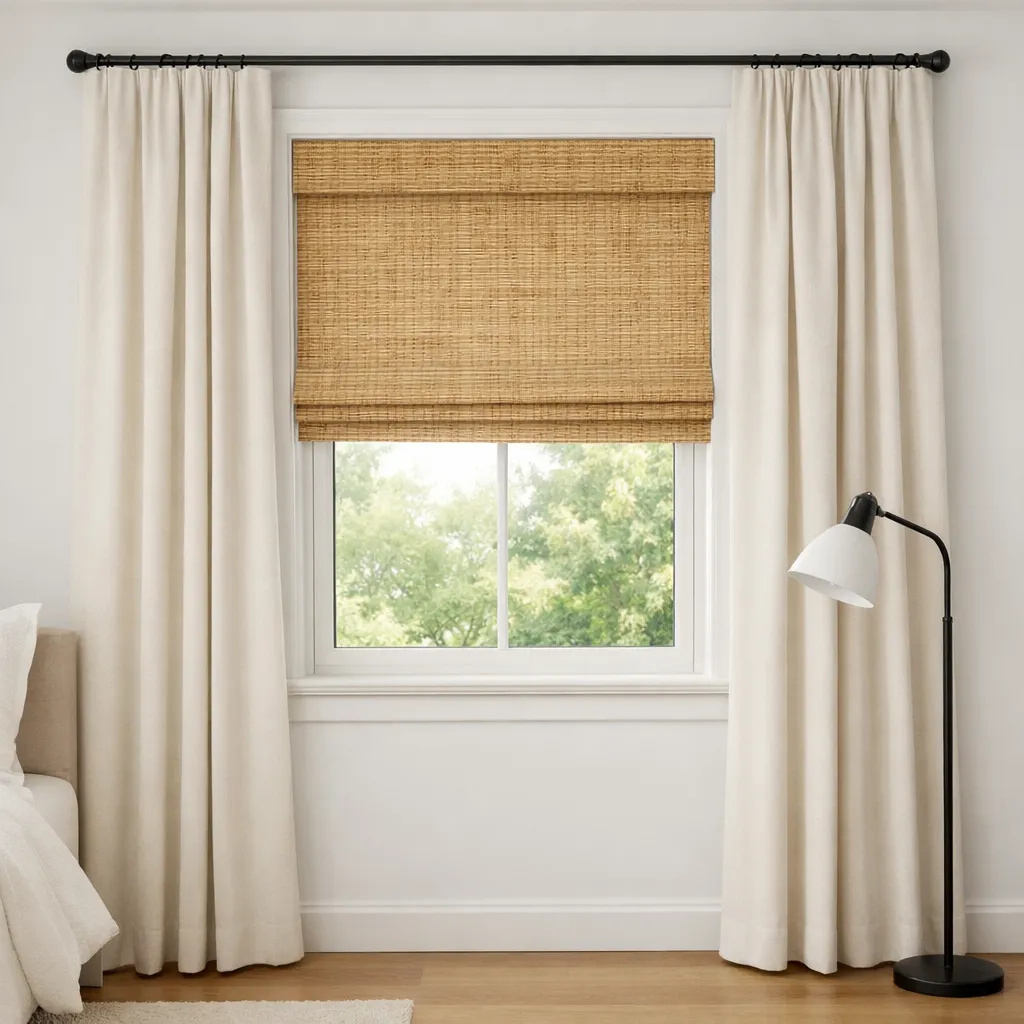
Check the room from outside after dark with the lights on. A decorative sheer may look attractive during the day yet provide little nighttime privacy. Combine a functional shade with curtains, or use a lined treatment that closes fully. Keep fabric clear of heaters, baseboard units, and portable equipment.
Blackout is helpful for many guests, but complete darkness is not everyone’s preference. Layered treatments allow choice. Confirm that cords comply with current safety expectations and are secured away from children. Repair loose brackets and use anchors suited to the wall rather than relying on undersized screws.
Also consider sound and temperature control. A rug, upholstered headboard, and lined curtains soften echoes. Make supply vents accessible, provide a fan where climate permits, and include an extra blanket. Do not place bedding against a space heater or encourage guests to use unsafe extension cords.
Create storage without filling the room
Guests need a place for a suitcase, several hangers, and a few folded items—not necessarily an entire wardrobe. Clear a section of closet rail, add matching sturdy hangers, and leave one drawer empty. A folding luggage rack prevents bags from occupying the bed and reduces bending.
In a small room, choose double-duty pieces. A desk can serve as a dressing surface if one drawer is empty and cords are organized. A storage bench can hold spare bedding if it still leaves comfortable circulation. Wall hooks are useful for a robe or tote, but place them where hanging items will not block doors or artwork.
Open storage should look intentionally available. Labeling every basket can feel institutional, while leaving no clue can be frustrating. A single visible basket with extra towels or a shelf with folded blankets communicates its purpose without signage everywhere.
Upgrade walls and art with restraint
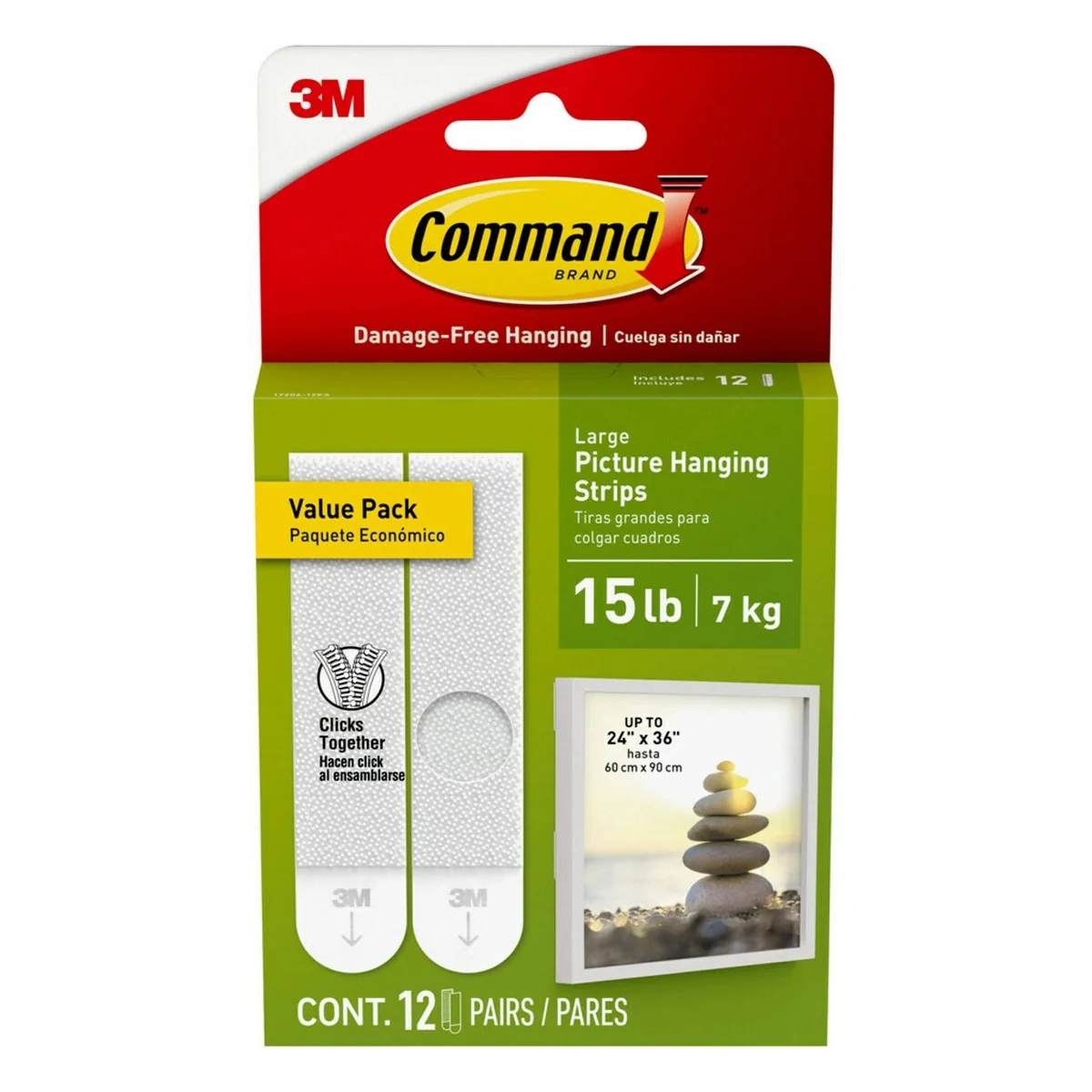
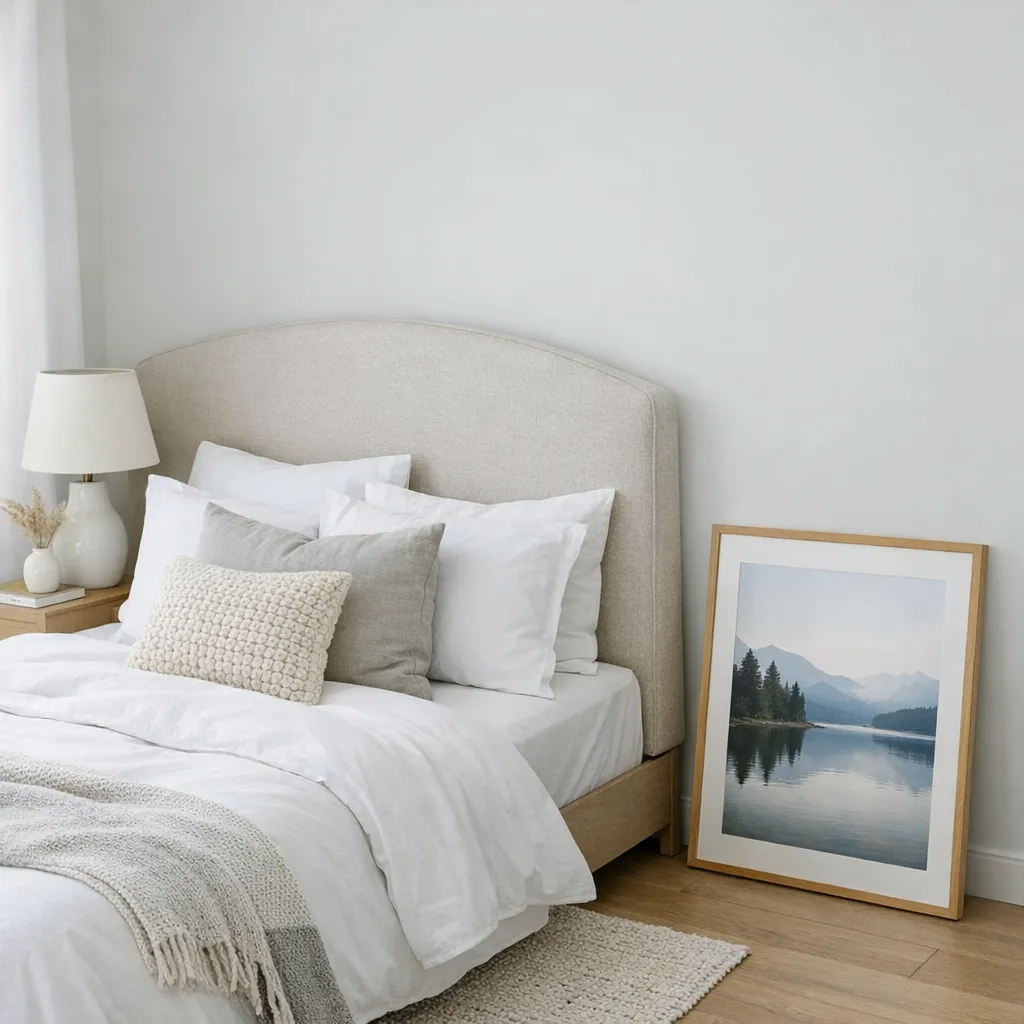
One appropriately scaled artwork above a dresser often has more impact than a scattered gallery of undersized frames. Above a bed, use secure mounting and avoid heavy, fragile objects where they could fall onto sleepers. Consider a textile, lightweight <a href="/products/marmont-hill-black-tang-18x12/" class="product-inline-link">framed print</a>, or paint treatment when seismic activity, old plaster, or rental restrictions make heavy art unsuitable.
Keep family photographs limited in a guest room. A few are warm; dozens can make visitors feel they are sleeping in a private archive. Landscapes, abstracts, architectural prints, and local imagery are broadly comfortable choices. Use frames you already own by unifying mats or paint finishes rather than replacing everything.
Removable wallpaper can define the headboard wall or closet interior, but assess wall finish and moisture first. Order a sample, leave it applied for the recommended test period, and check removal behavior. Pattern matching creates waste, so calculate extra material before purchasing.
Make a small room feel larger
Preserve the longest sightline from the doorway and keep furniture legs or lower wall area visible. A bed with modest visual weight, curtains mounted to emphasize height, and one large mirror can increase the sense of space. Position mirrors to reflect daylight or art rather than a cluttered closet.
Do not automatically push every piece against a wall. Sometimes centering a bed with two narrow shelves creates better access than wedging one side into a corner. In very tight rooms, one shared dresser and wall-mounted ledges may be more useful than two conventional nightstands.
Choose fewer, larger accessories instead of many small ones. A substantial lamp, medium rug, and one art piece create clearer visual structure. Keep the floor under the bed organized in matching containers if it must provide storage; exposed mixed boxes make the room feel crowded.
Add a practical welcome layer
Stock only things a guest can confidently use: tissues, a wastebasket, water glass or sealed bottle, spare charging cable, and a card with Wi-Fi details if appropriate. Place them together rather than scattering amenities around the room. Include a small clock only if its display can dim and it operates quietly.
A mirror near natural light, accessible outlets, and a clear tabletop support everyday routines. If the nearest bathroom is not obvious, explain where towels and toiletries are kept. Avoid strongly scented candles, diffusers, or laundry products because guests may have sensitivities. Unscented cleanliness is more universally welcoming than fragrance.
For households with occasional work-from-home guests, provide a stable chair and a usable surface rather than assuming the bed is a desk. Check that furniture is structurally sound and that Wi-Fi reaches the room. A simple printed note can explain any unusual heating, window, or lock operation.
Keep a flexible room from feeling temporary
A guest room that doubles as an office works best when work materials can disappear. Use a closed cabinet, rolling cart, or lidded boxes sized for one storage zone. Clear the desktop before visitors arrive and provide a lamp that works for both tasks. Avoid asking guests to sleep beside stacks of paperwork or fragile hobby equipment.
A daybed or sleeper sofa can save space, but judge it as a bed, not just seating. Open it fully, measure circulation, and sleep-test the surface. Make sure linens, setup instructions, and necessary supports are together. Murphy beds require sound installation into suitable structure and should be fitted professionally when the wall or mechanism is uncertain.
Create a reset routine so conversion does not become an exhausting project. Keep a dedicated set of guest linens, a short cleaning checklist, and one container for objects temporarily removed from the room. The easier the reset, the more consistently welcoming the space will be.
Avoid common makeover mistakes
Do not buy décor before measuring, choose white textiles that cannot be laundered easily, or cover every surface. Avoid obstructing vents and outlets, hanging unsafe objects above the bed, and using rugs that curl at the edges. A rug needs an appropriate pad and enough furniture contact to remain stable.
Another mistake is designing for photographs instead of overnight use. Excess pillows, a tray permanently staged on the bed, and fragile objects on nightstands become chores for guests. Style the room, but leave obvious places for their belongings. Test the room by spending a night there if possible.
Finally, do not conceal moisture, mold, pest activity, damaged wiring, or structural problems with paint and furniture. Stop cosmetic work and address the cause. Electrical additions, significant wall repair, and uncertain moisture damage may require qualified help; rental maintenance issues should be reported to the property owner.
A one-weekend makeover plan
On the first morning, empty visible clutter, measure, patch minor wall damage, and deep-clean from ceiling fan to baseboards. In the afternoon, paint if permitted or rearrange furniture and install nonpermanent color elements. Allow finishes to dry and ventilate according to their instructions.
On the second day, make the bed, install safe window treatments and lighting, hang lightweight art correctly, and create an empty storage zone. Finish by testing outlets, lamps, door movement, privacy, and the nighttime route to the bathroom. Photograph the result, then remove anything that looks attractive but interferes with use.
Use this final check: stable bed, clean bedding, two reachable lights, working privacy, clear floor route, available outlet, luggage space, empty hangers, wastebasket, and comfortable temperature. If those ten conditions are met, the room is functionally ready; decoration can evolve later.
Frequently asked questions
What is the most affordable guest bedroom update?
Editing clutter and rearranging furniture cost nothing. After that, fresh bedding, matched light bulbs, and one repeated accent color usually create the strongest low-cost change.
Should a guest bedroom have a television?
It is optional. Prioritize sleep, lighting, privacy, and charging first. If adding one, mount it safely, organize cords, and provide simple instructions without making the screen the room’s visual focus.
What color is best for a guest room?
No single color is best. Muted, low-contrast palettes are versatile, but light and room orientation change every paint. Sample the color in place and build around the home’s existing finishes.
How can renters update a guest room?
Use freestanding nightstands, plug-in lights, textiles, removable treatments tested on the wall, and art mounted with lease-approved methods. Keep original hardware labeled for reinstatement.
How many pillows should be on the bed?
Prioritize useful sleeping pillows—ideally a choice of firmness—over decorative quantity. One small accent cushion is enough if it does not create extra work.
A successful guest bedroom makeover is less about copying a style and more about anticipating a visitor’s needs. Make the room easy to enter, sleep in, organize, and reset. Once those basics work, color, texture, and personal character can turn a spare space into a room people genuinely enjoy using.





Share your results
Reader transformations
Have you tried this makeover? Share your experience below.